Preserving. Proclaiming. Transmitting
The Anglican Catholic Heritage
“Thy testimonies have I claimed as mine heritage for ever:
for they are the very joy of my heart.”
— Psalm 119:111
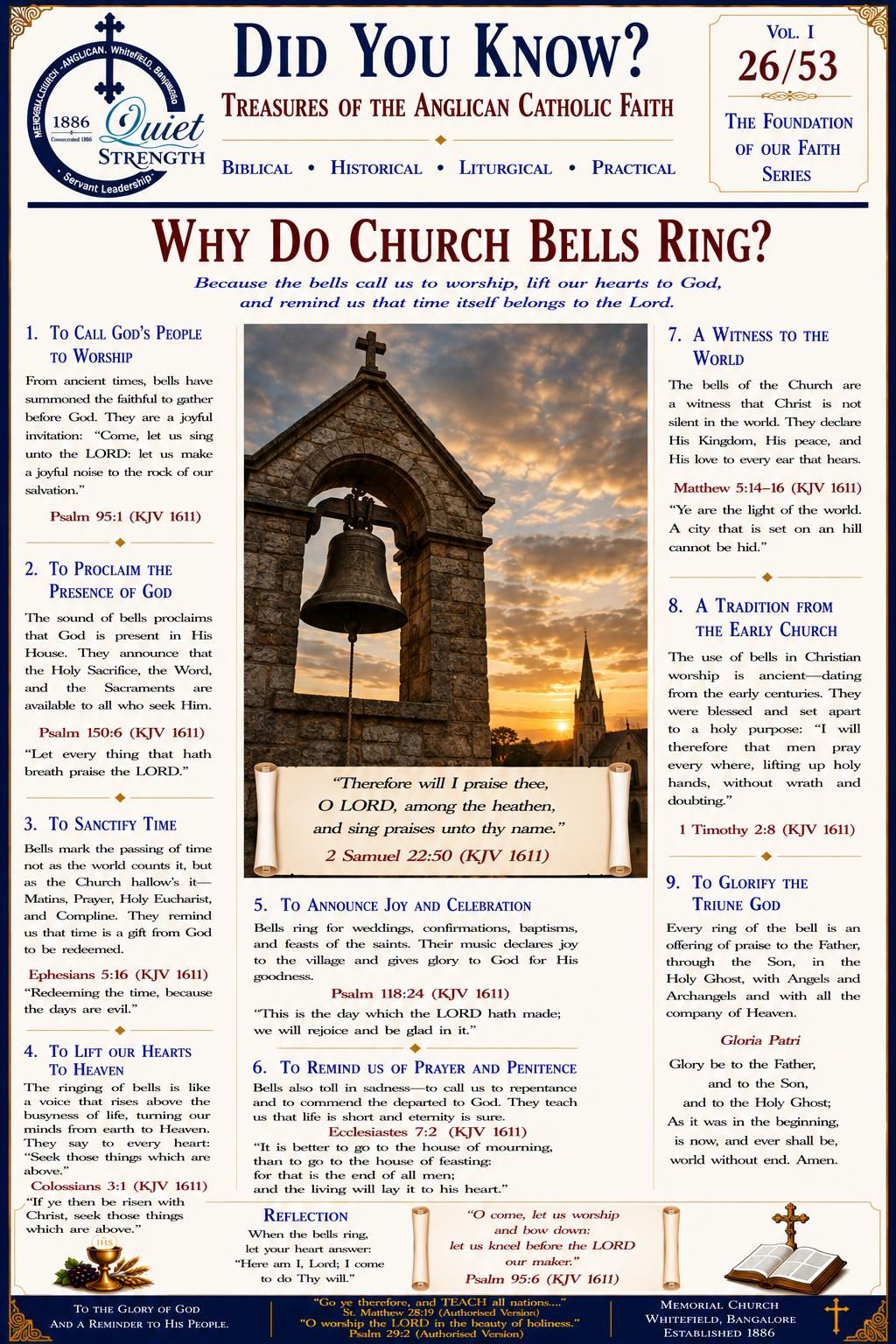
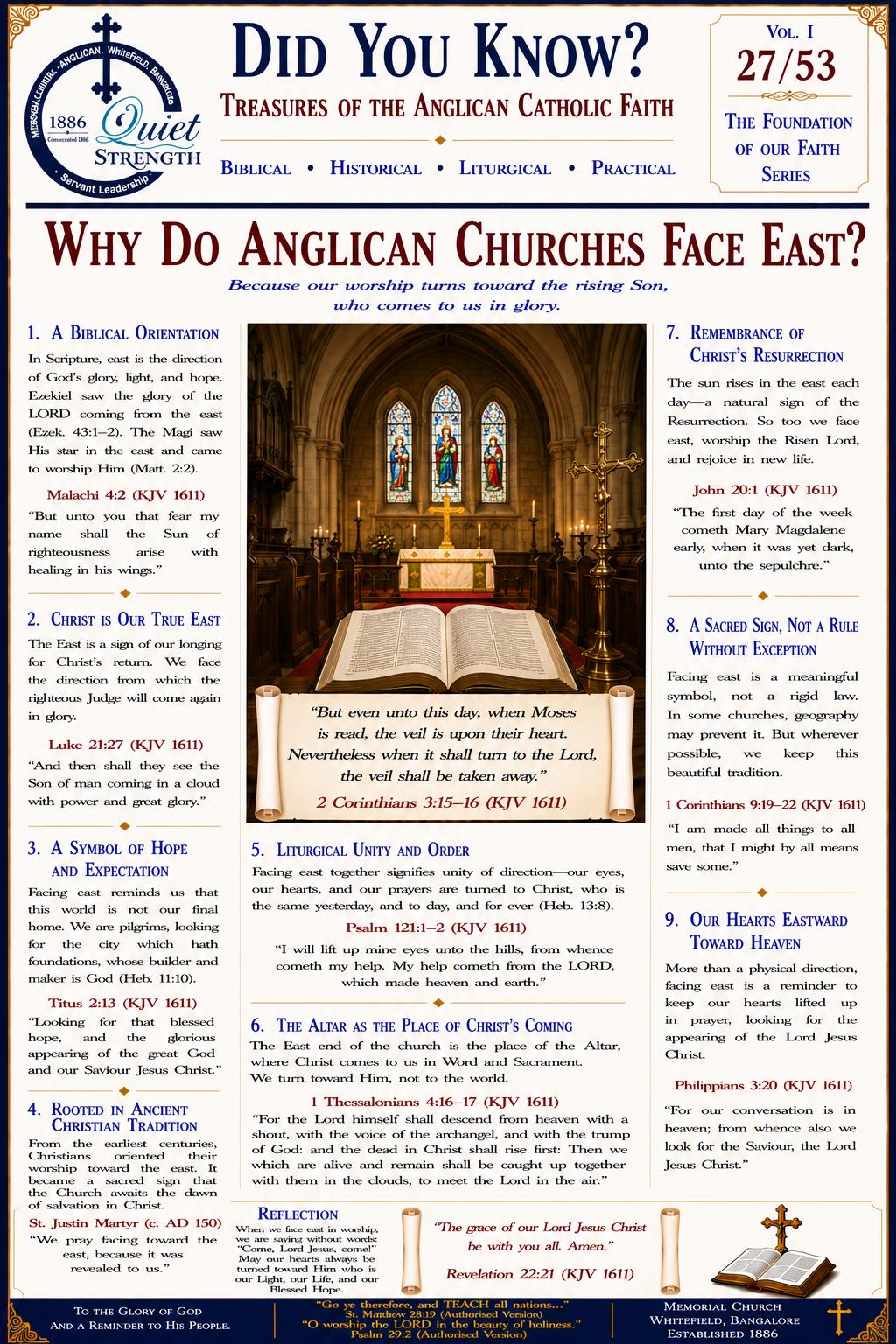
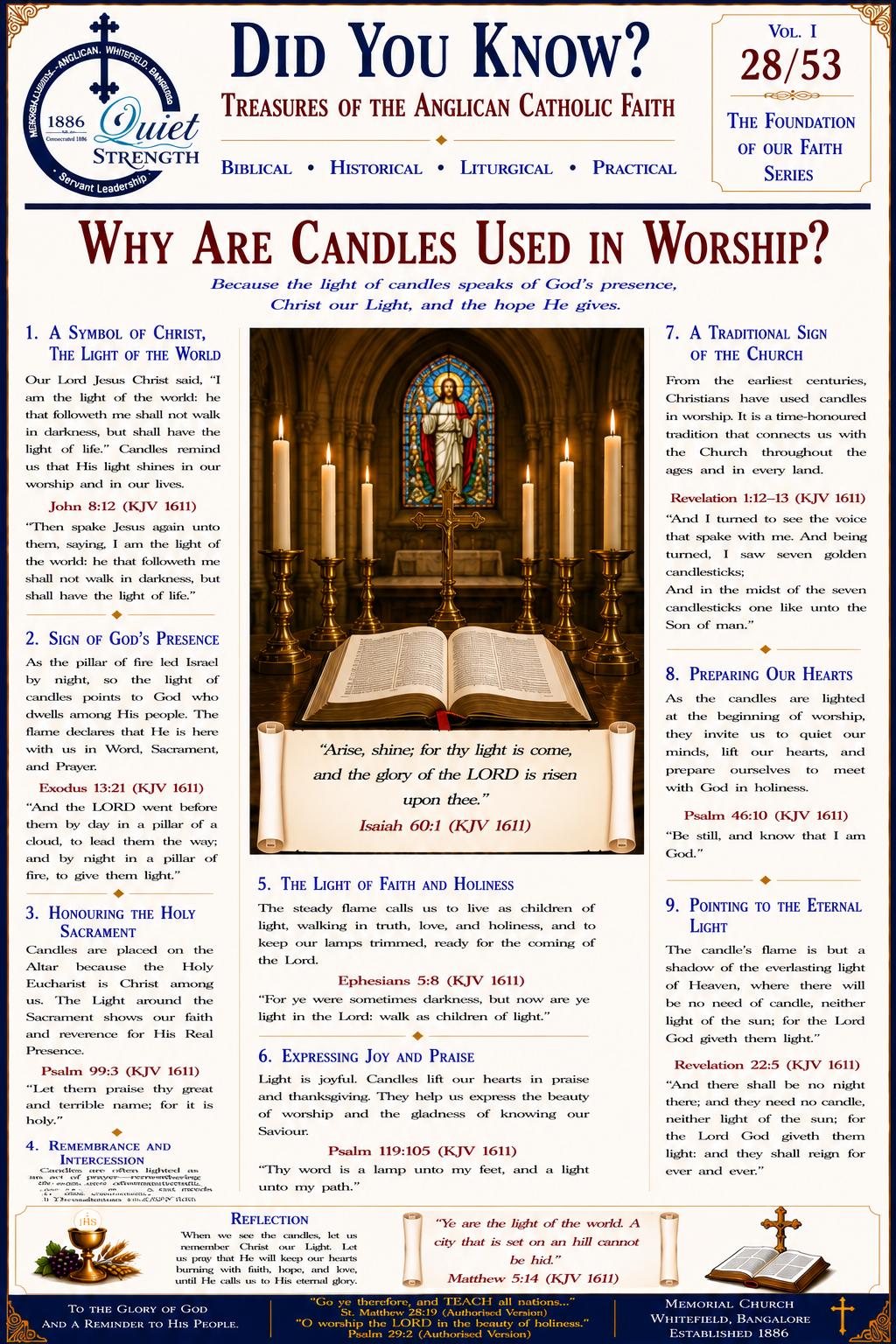
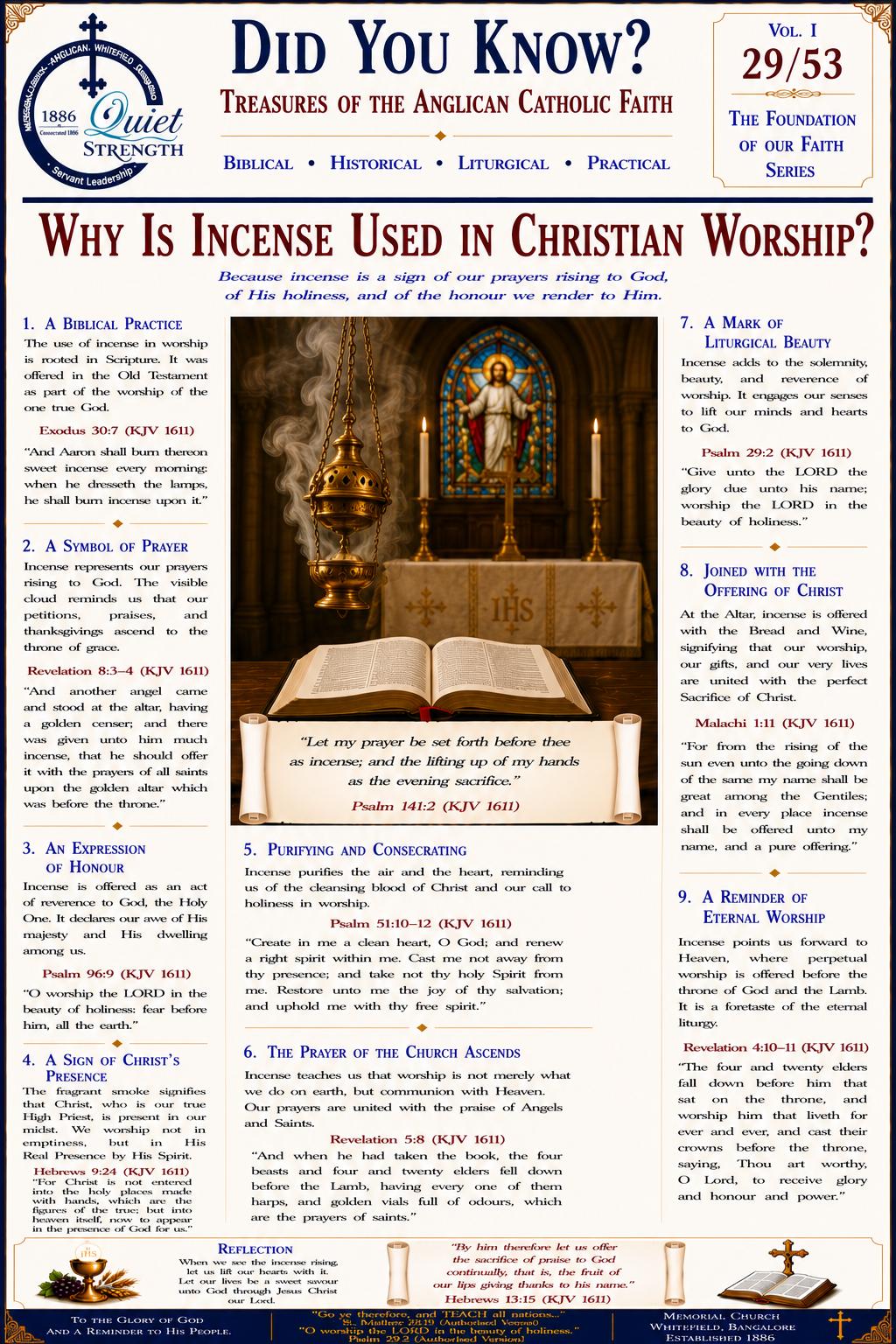
Small Details.
A Rich Heritage.
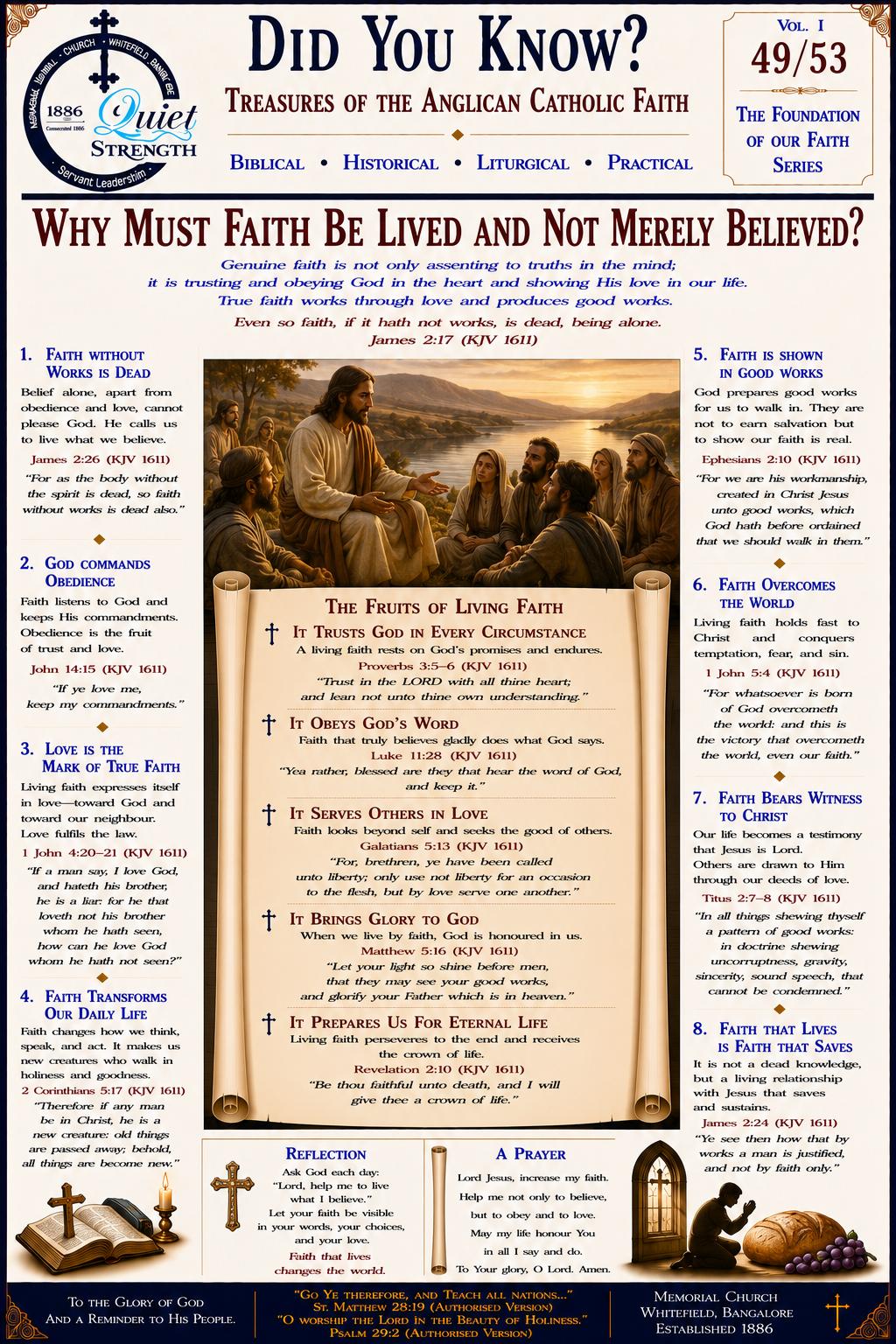
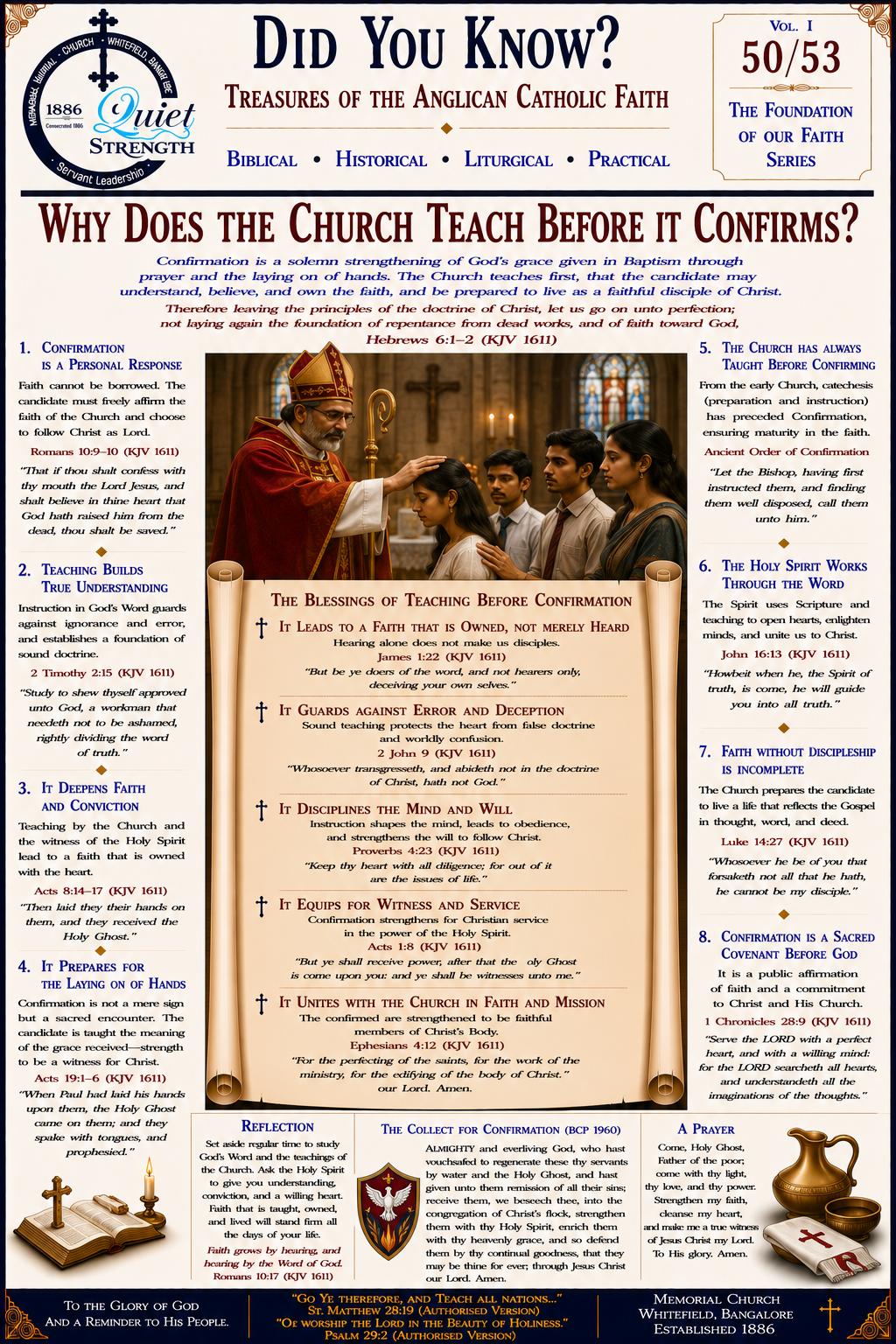
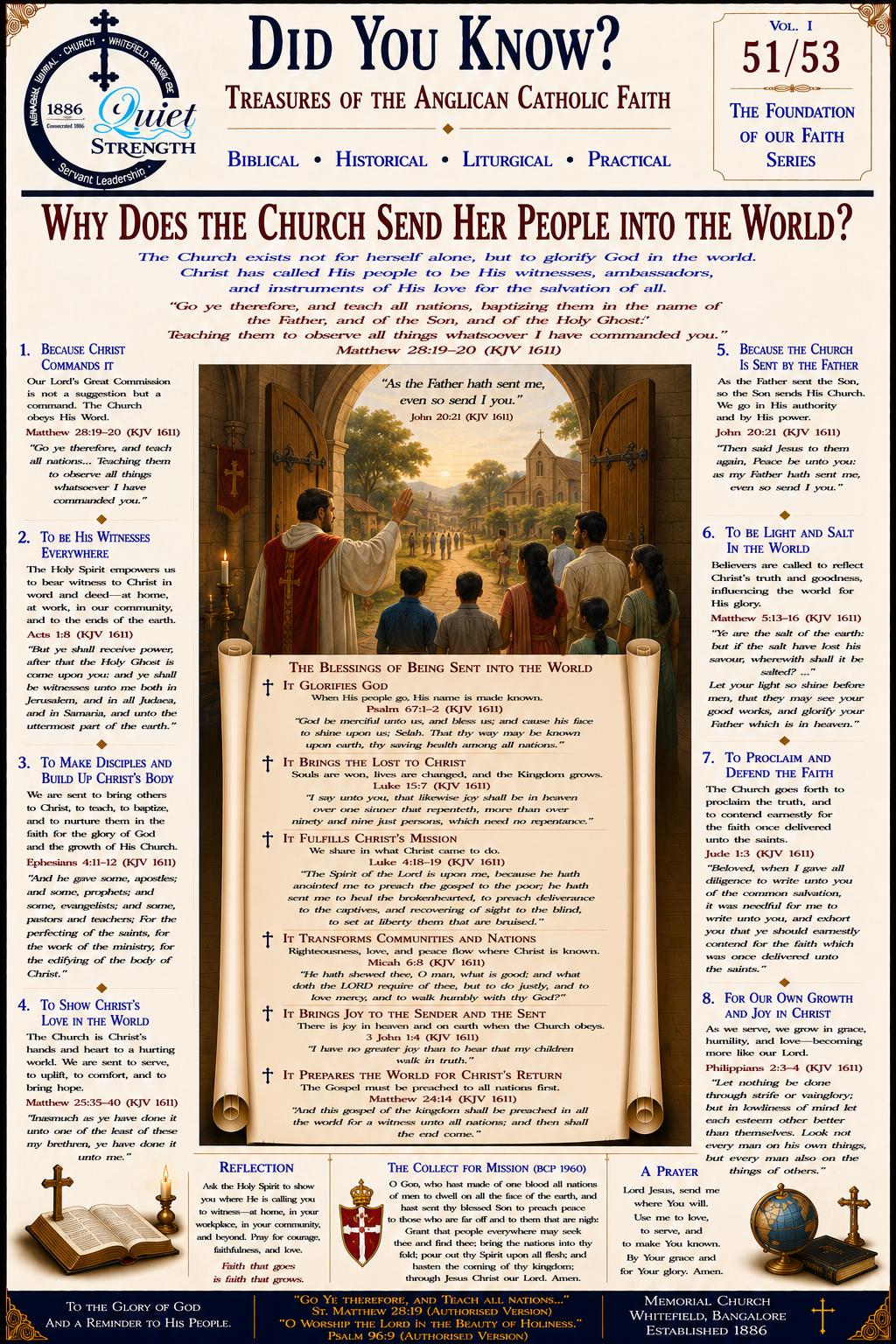
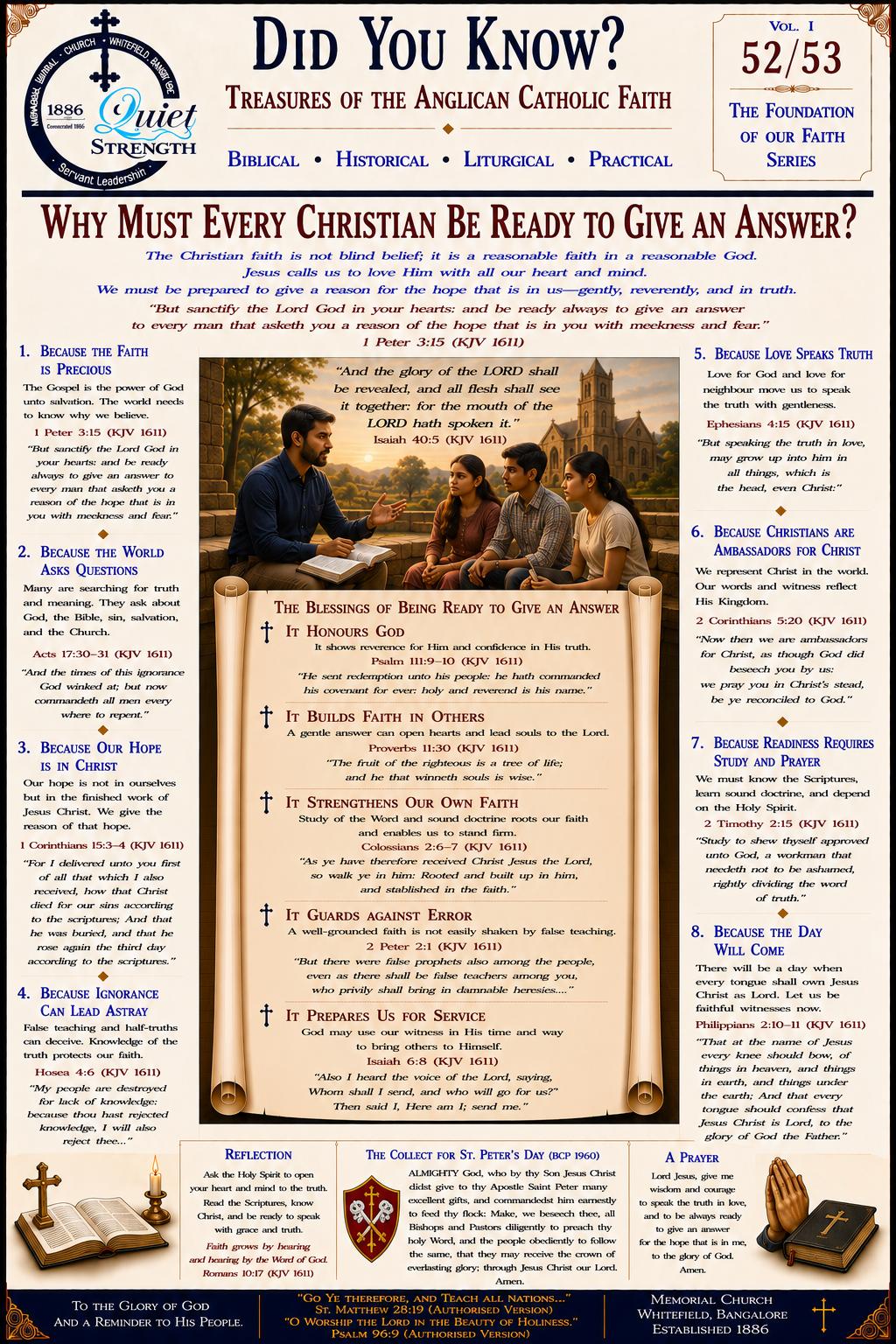
The Anglican Christian tradition has been shaped across centuries by Holy Scripture, worship, prayer, history and the life of the Church.
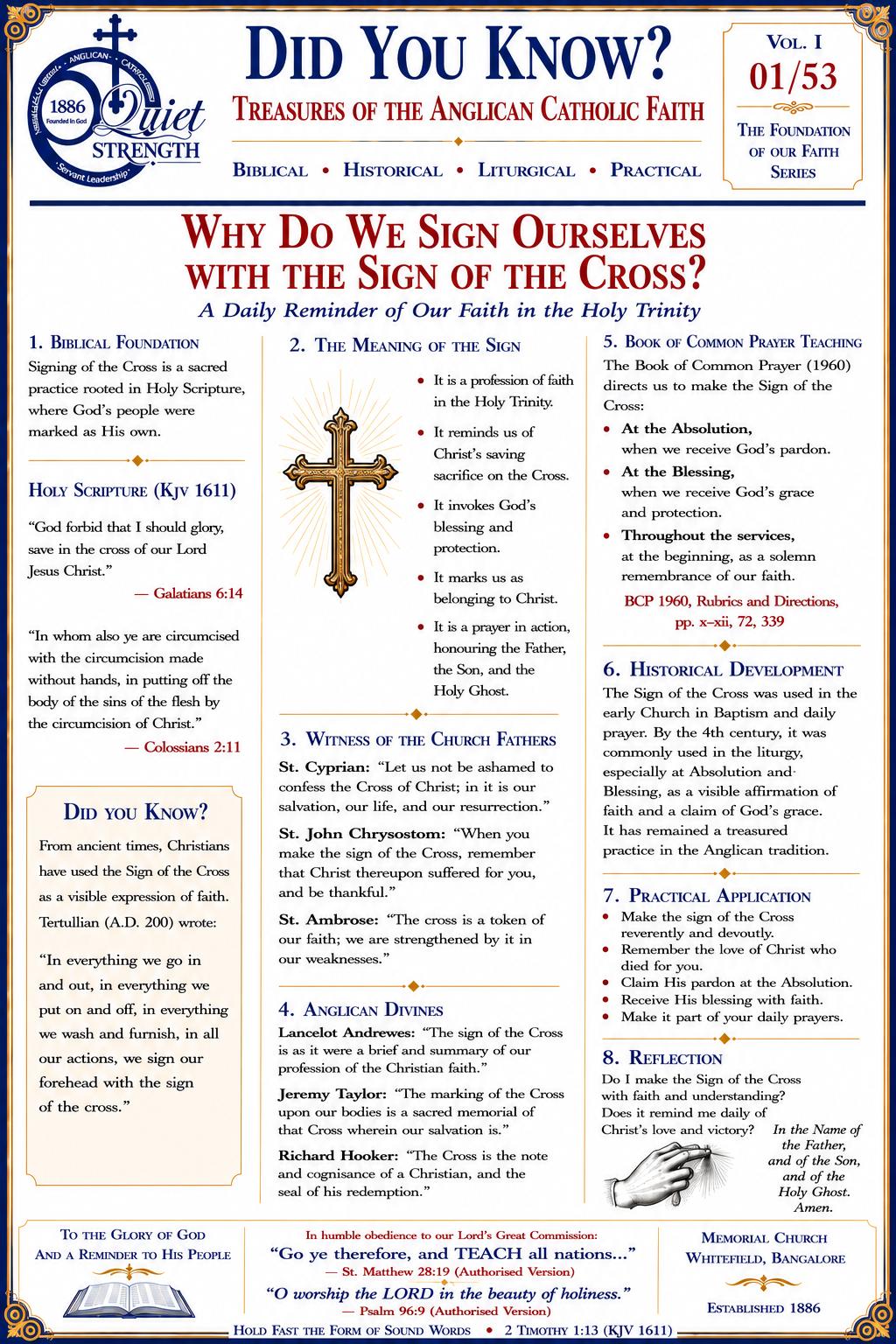
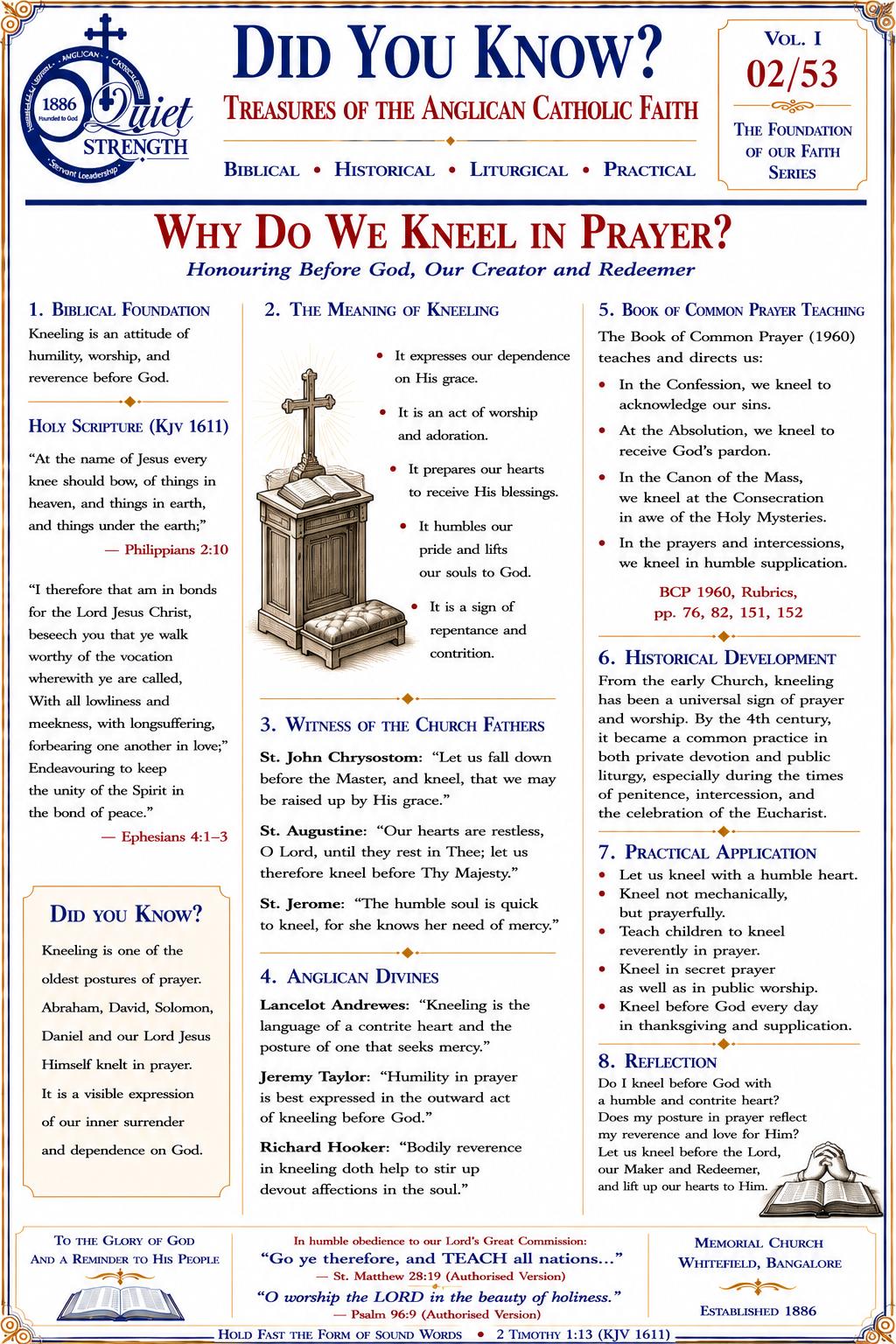
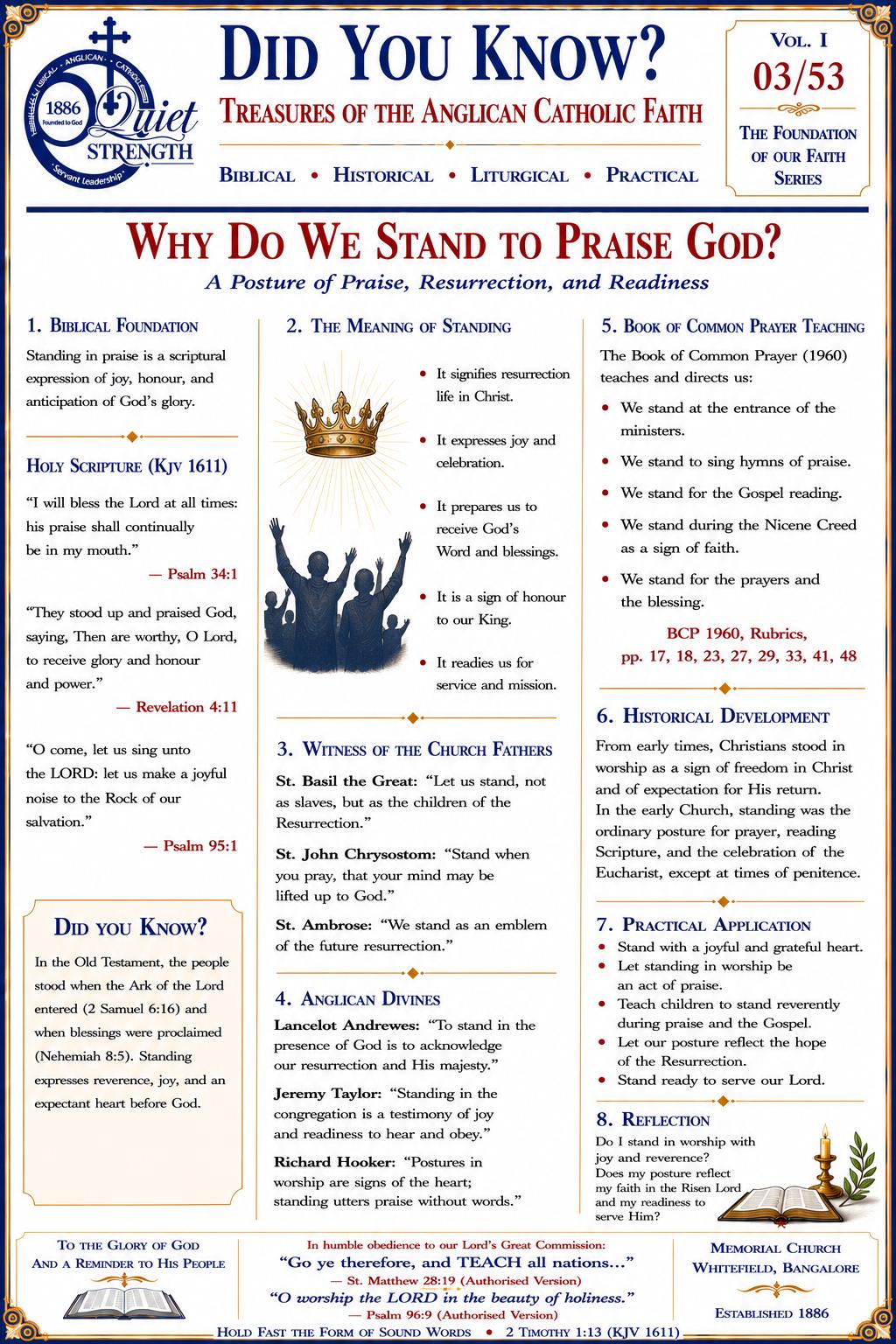
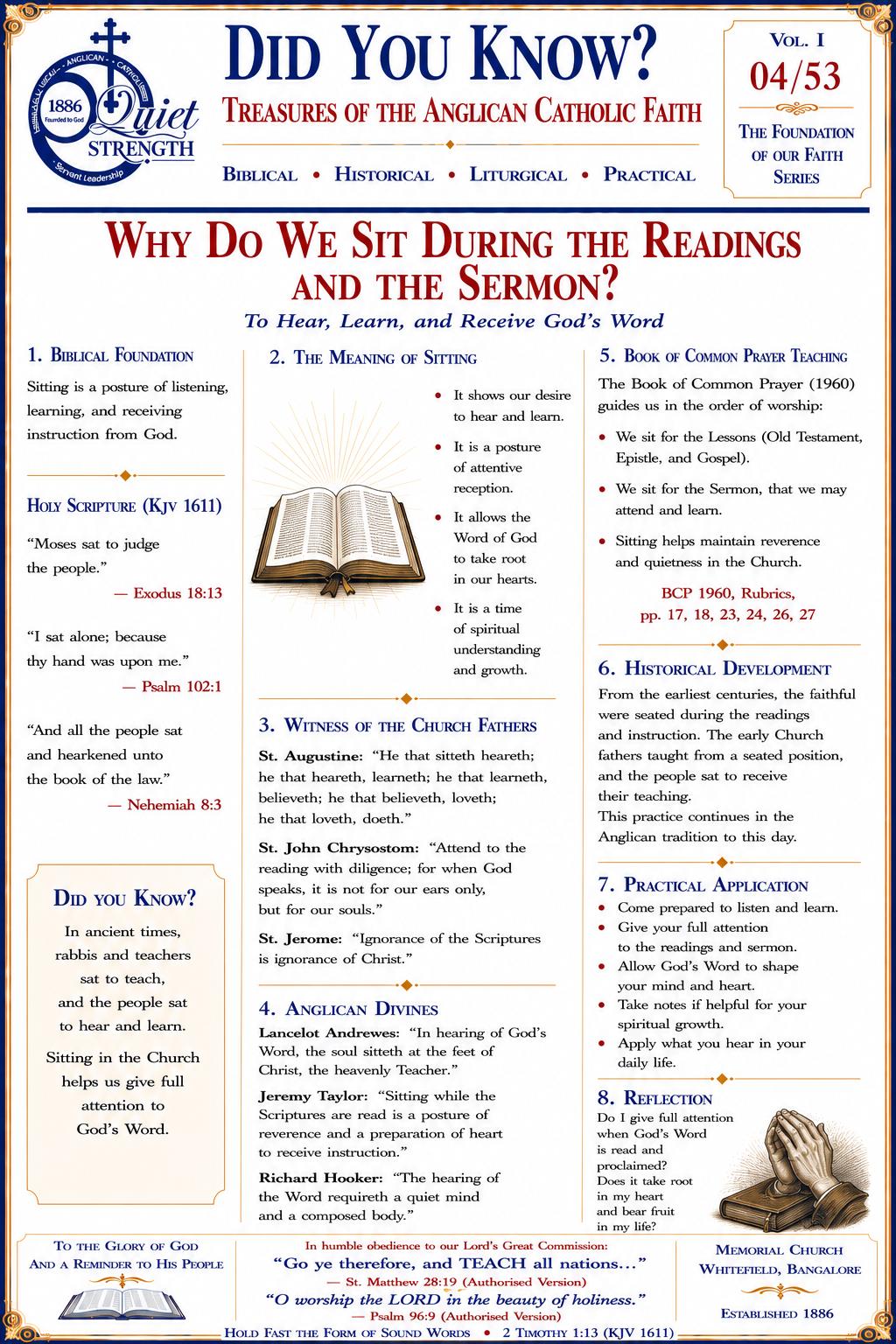
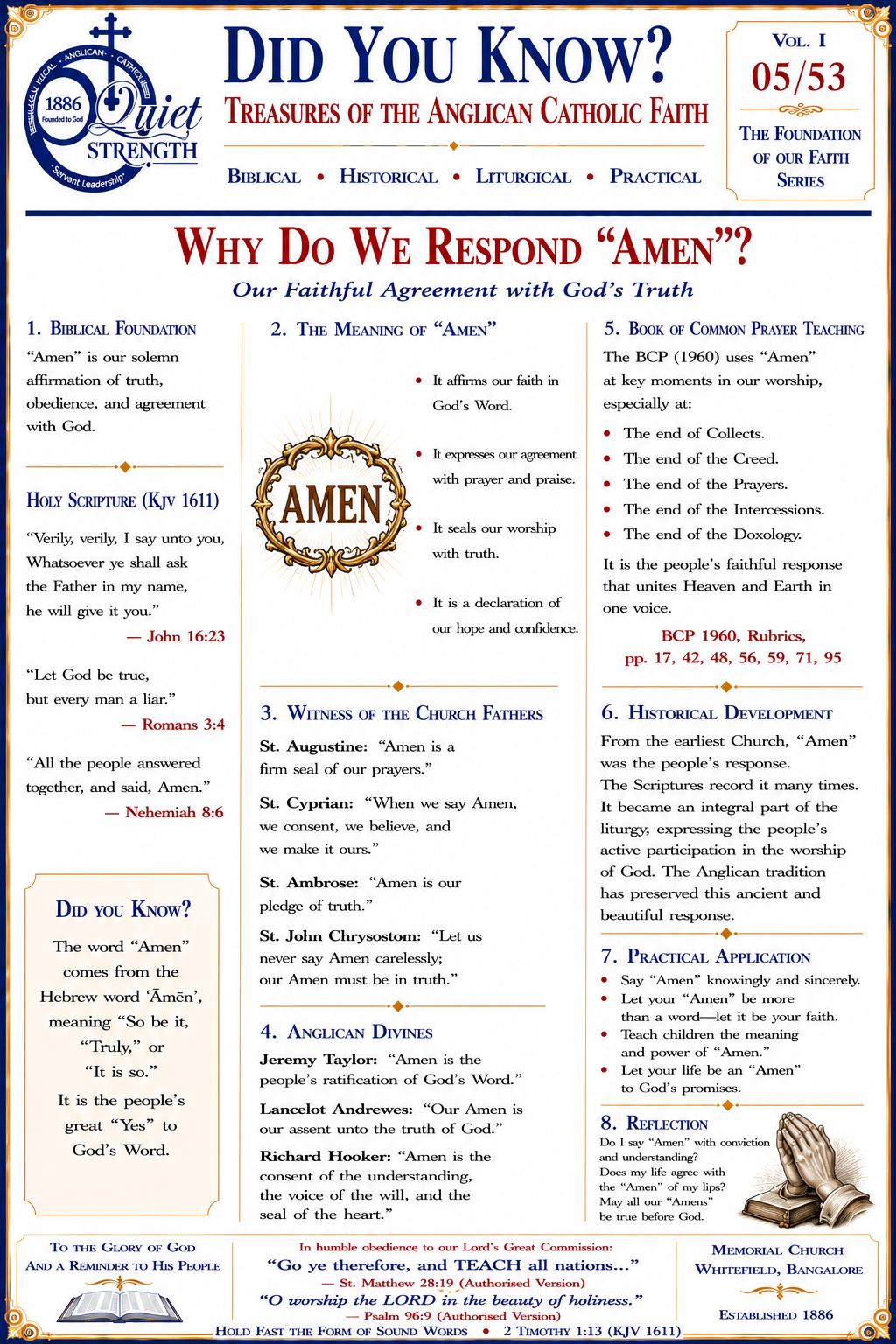
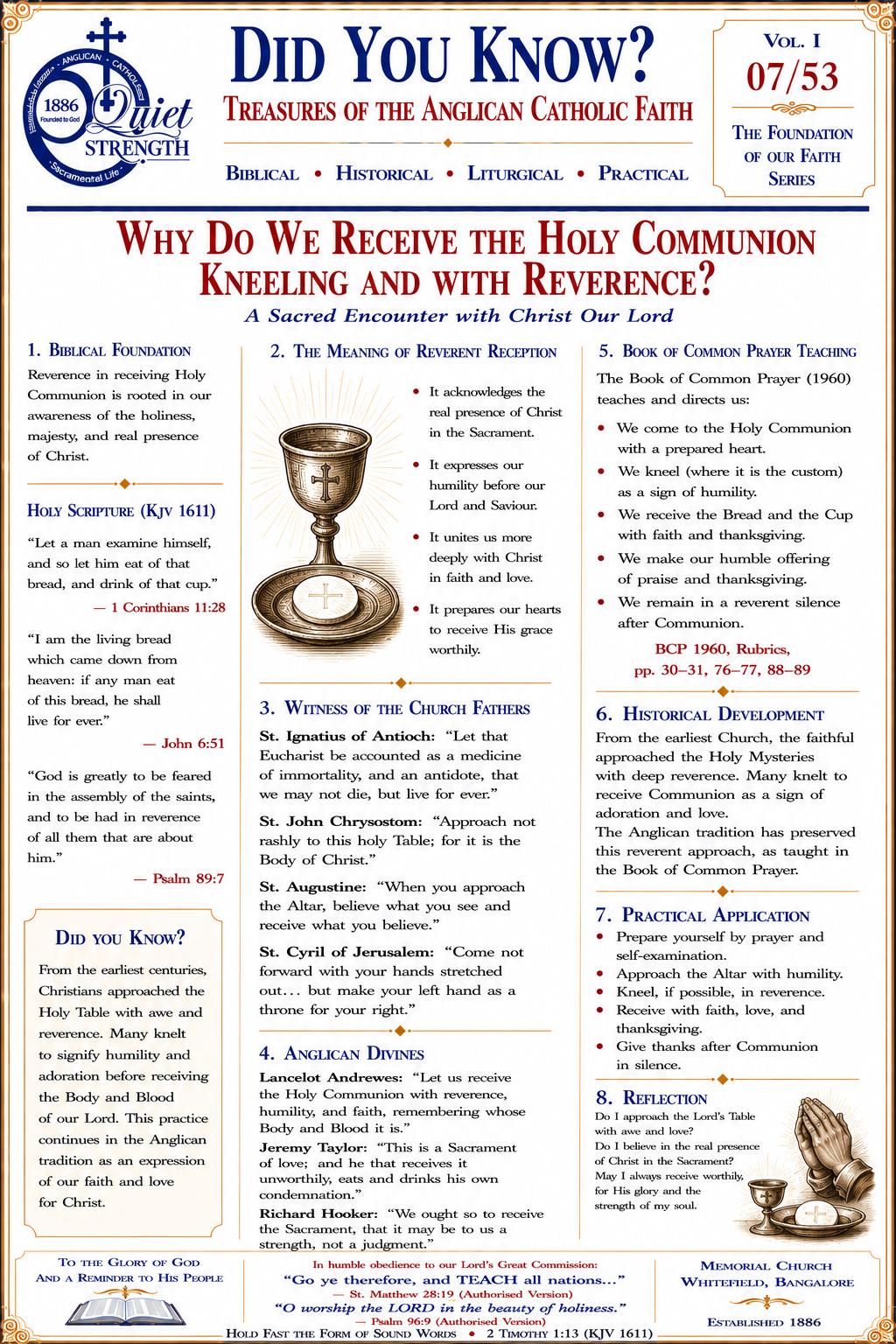
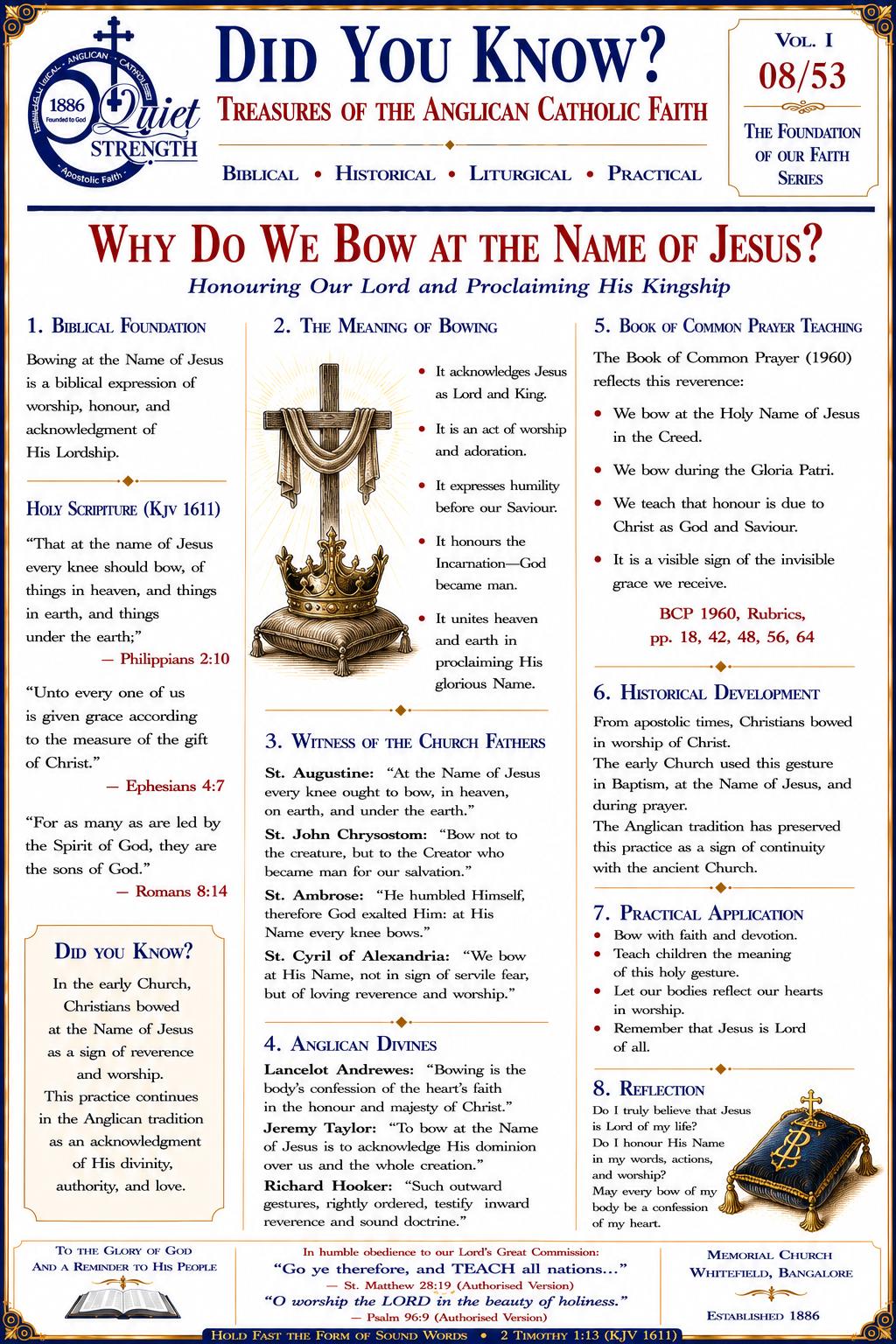
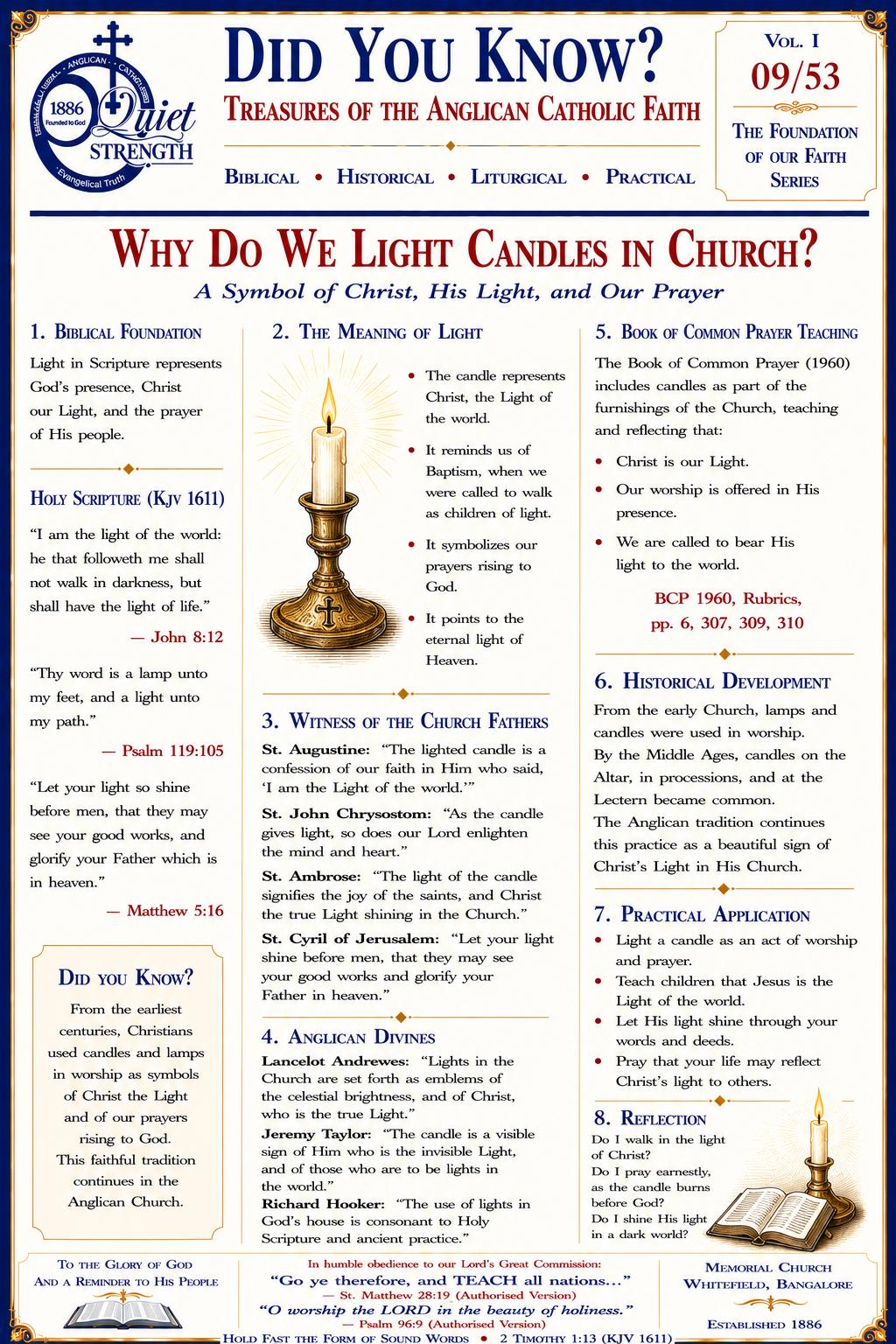
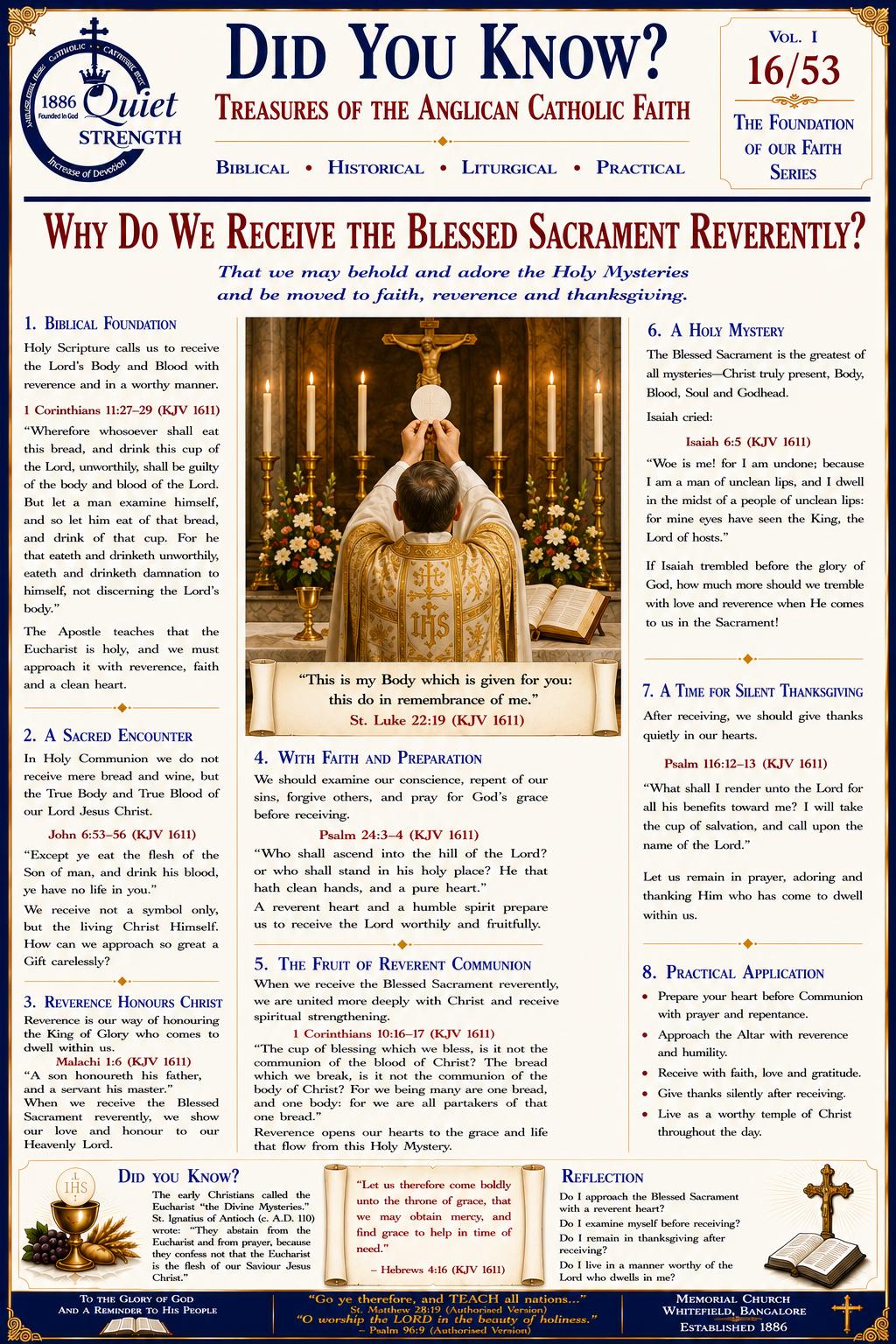
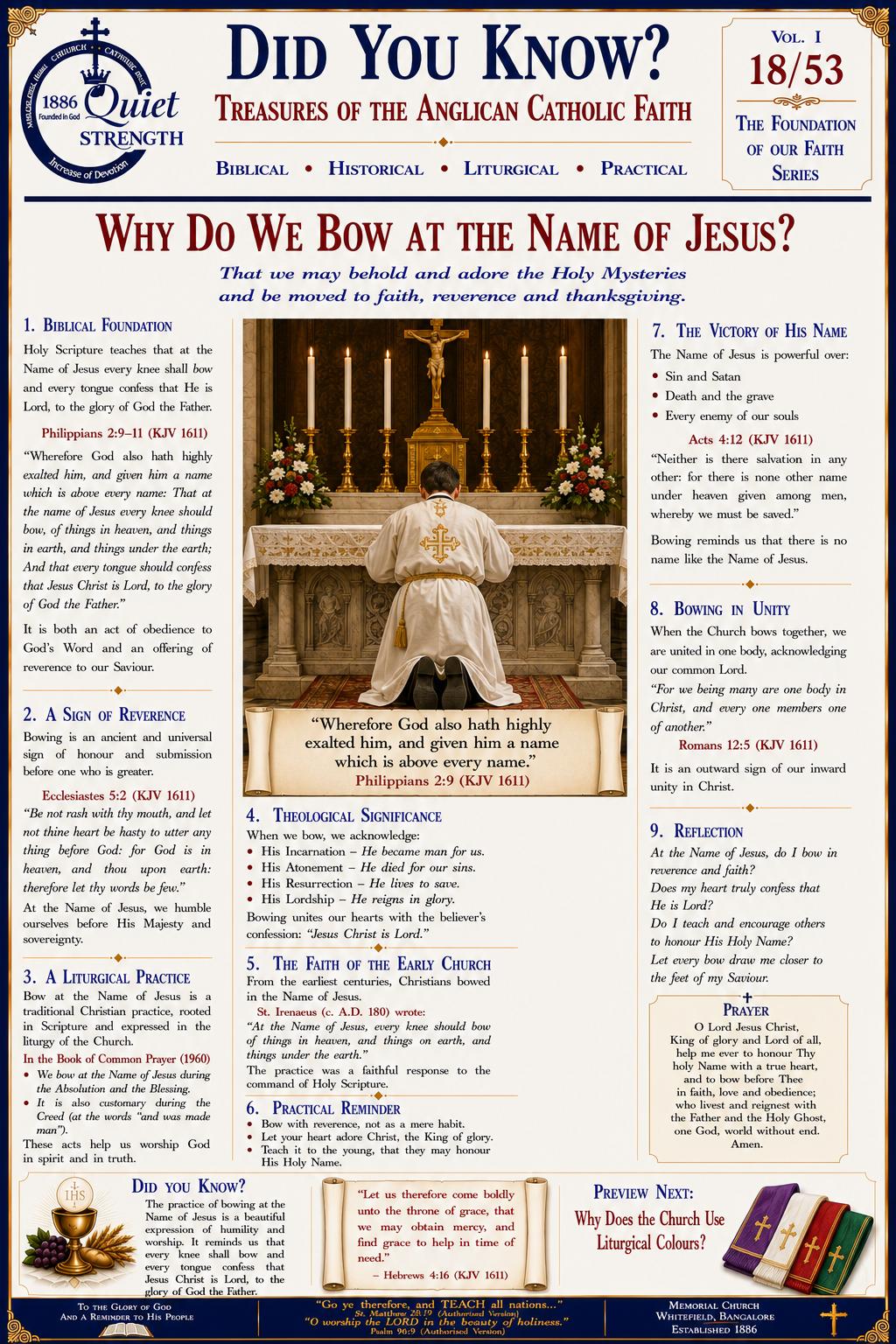
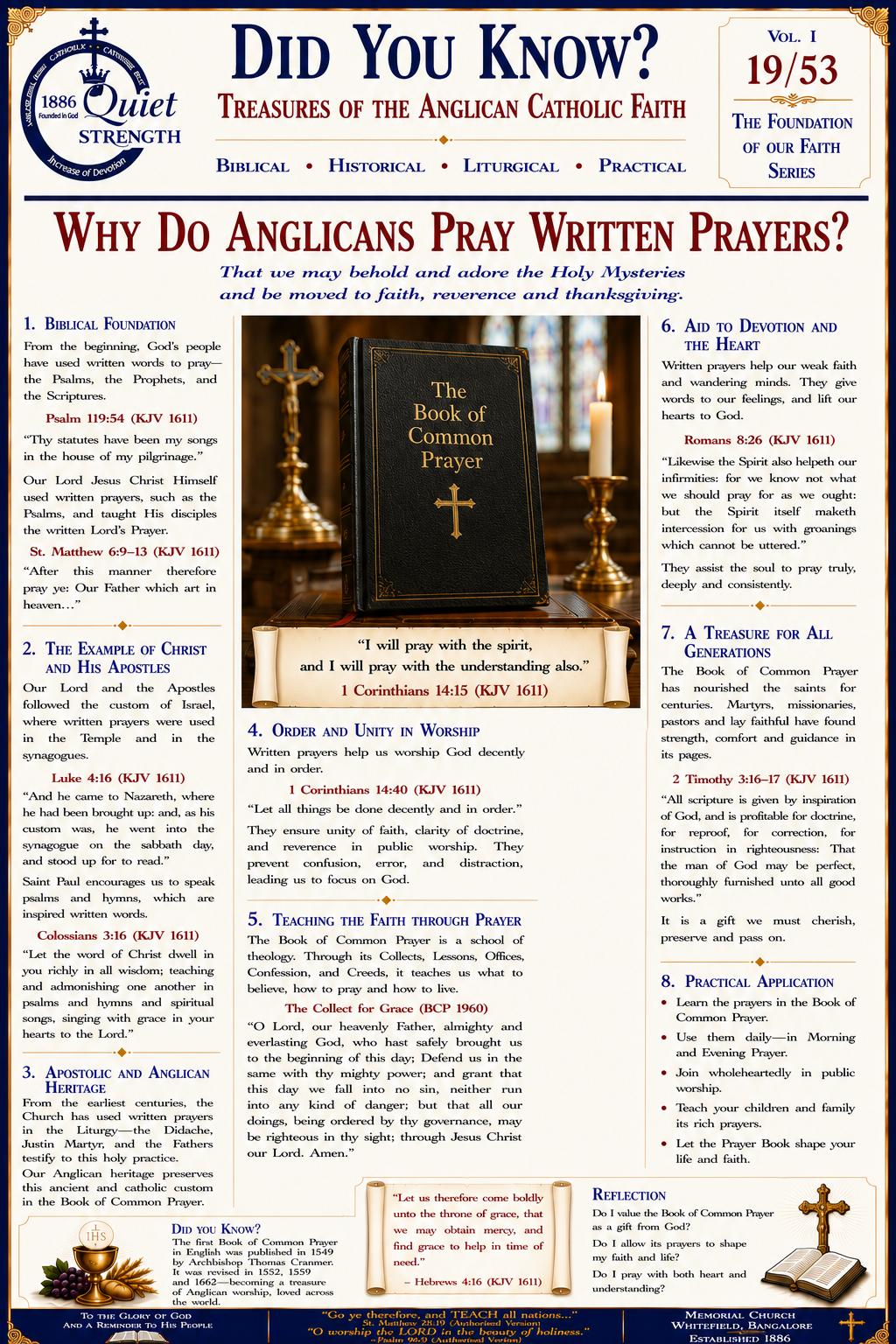
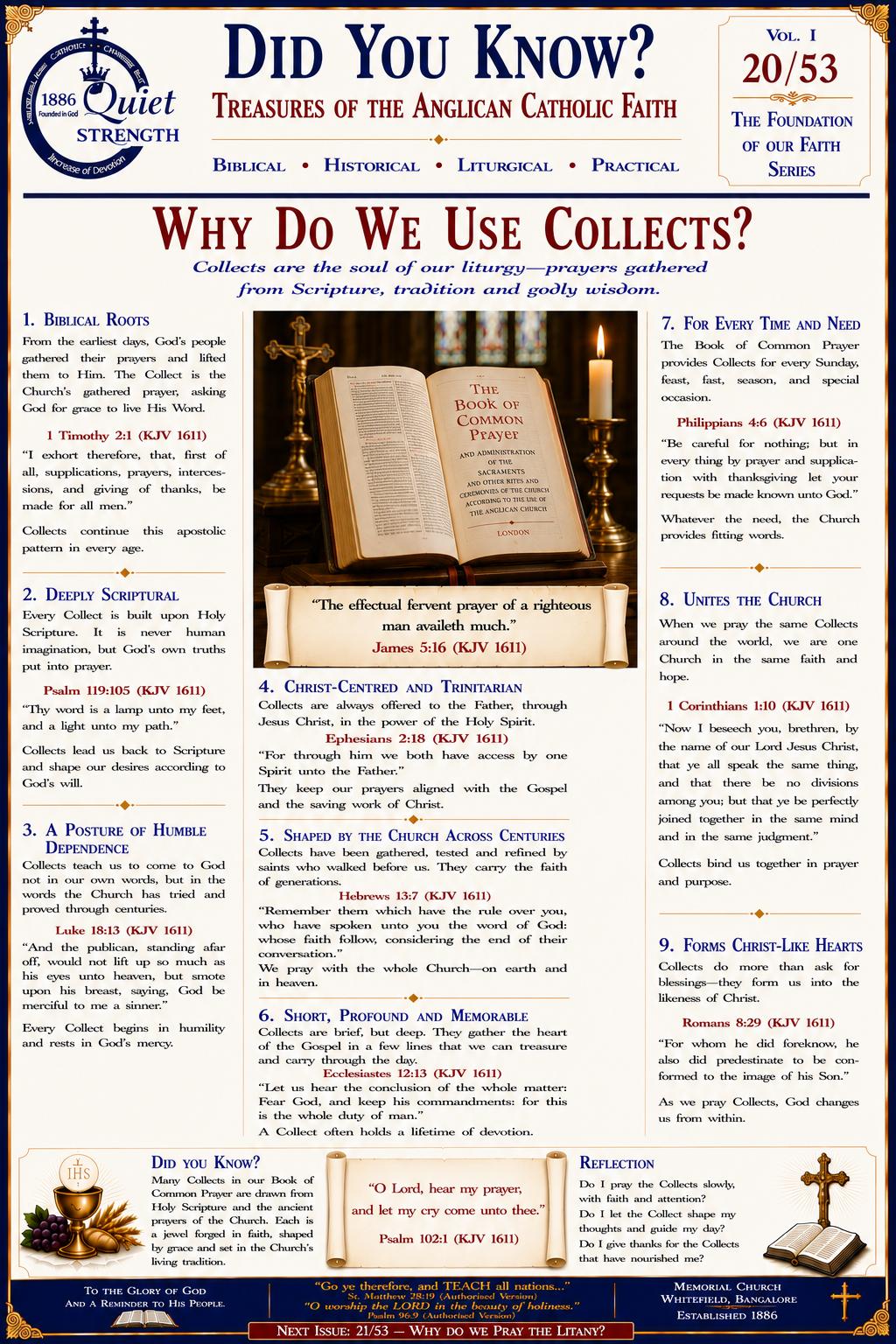
“Did You Know?” brings together short and accessible notes about this heritage, offering readers an opportunity to discover the meaning, history and significance behind familiar aspects of Anglican life.
Each entry should be easy to read while encouraging further exploration of the faith, worship and heritage preserved within this website.
Did you know that Anglican choral worship has a history reaching back centuries? Cathedral choirs, collegiate foundations, psalmody, canticles, and sacred anthems have helped generations of Christians offer praise to God through the beauty and discipline of music, making hymnody and choral prayer an enduring part of Anglican worship.
1563 / 1571
Did you know that the Collects of the Book of Common Prayer gather the Church's prayer into brief, carefully formed petitions? Drawing upon ancient Christian prayers and the biblical language of the Faith, they lead worshippers to pray with reverence, clarity, and unity throughout the seasons of the Christian year.
1563 / 1571
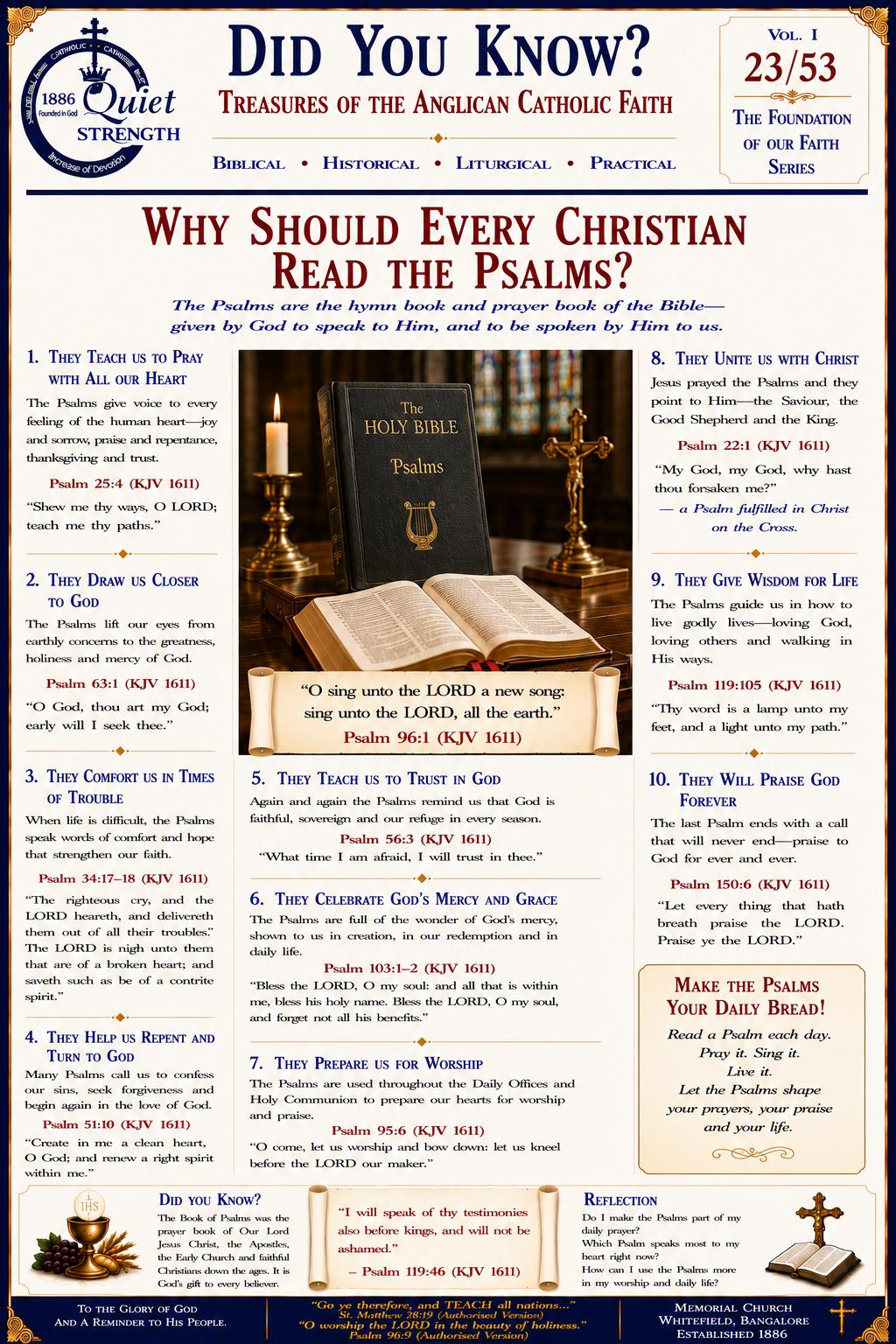
Did you know that the Psalms have held a central place in Anglican worship for centuries? The Book of Common Prayer arranged the Psalter for regular recitation, allowing the Church to pray the inspired words of Scripture together. Through the Psalms, generations of Anglicans have expressed praise, repentance, thanksgiving, sorrow, hope, and trust in God.
1563 / 1571
Did you know that Morning Prayer and Evening Prayer became defining features of Anglican devotional life? The Book of Common Prayer brought together Scripture readings, Psalms, canticles, prayers, and thanksgiving into a regular pattern of worship, helping Christians sanctify the day through prayer and the hearing of God's Word.
1563 / 1571
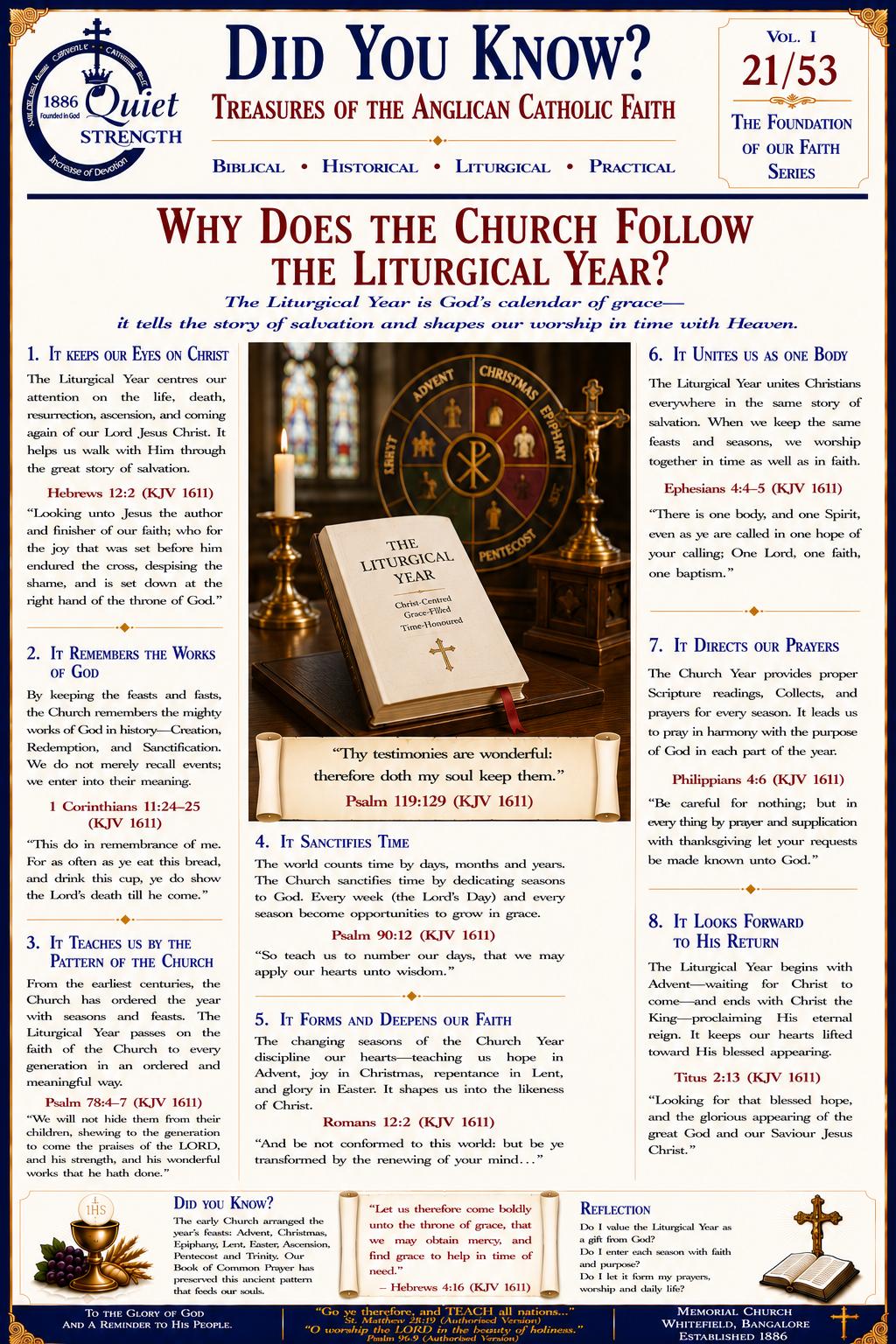
Did you know that Anglican worship follows the Christian Year, leading the Church through the great mysteries of Christ's life and saving work? From Advent and Christmas through Lent, Easter, Ascension, and Pentecost, the seasons provide a rhythm of Scripture, prayer, worship, and devotion centred upon Our Lord Jesus Christ.
1563 / 1571
Did you know that the first Book of Common Prayer was published in 1549? Prepared during the reign of King Edward VI, it brought together forms of daily prayer, the Holy Communion and other services into a single English-language volume for the worship of the Church of England. The Book of Common Prayer became one of the most influential texts in Anglican worship and helped shape Anglican devotional life and the English language for generations.
1563 / 1571
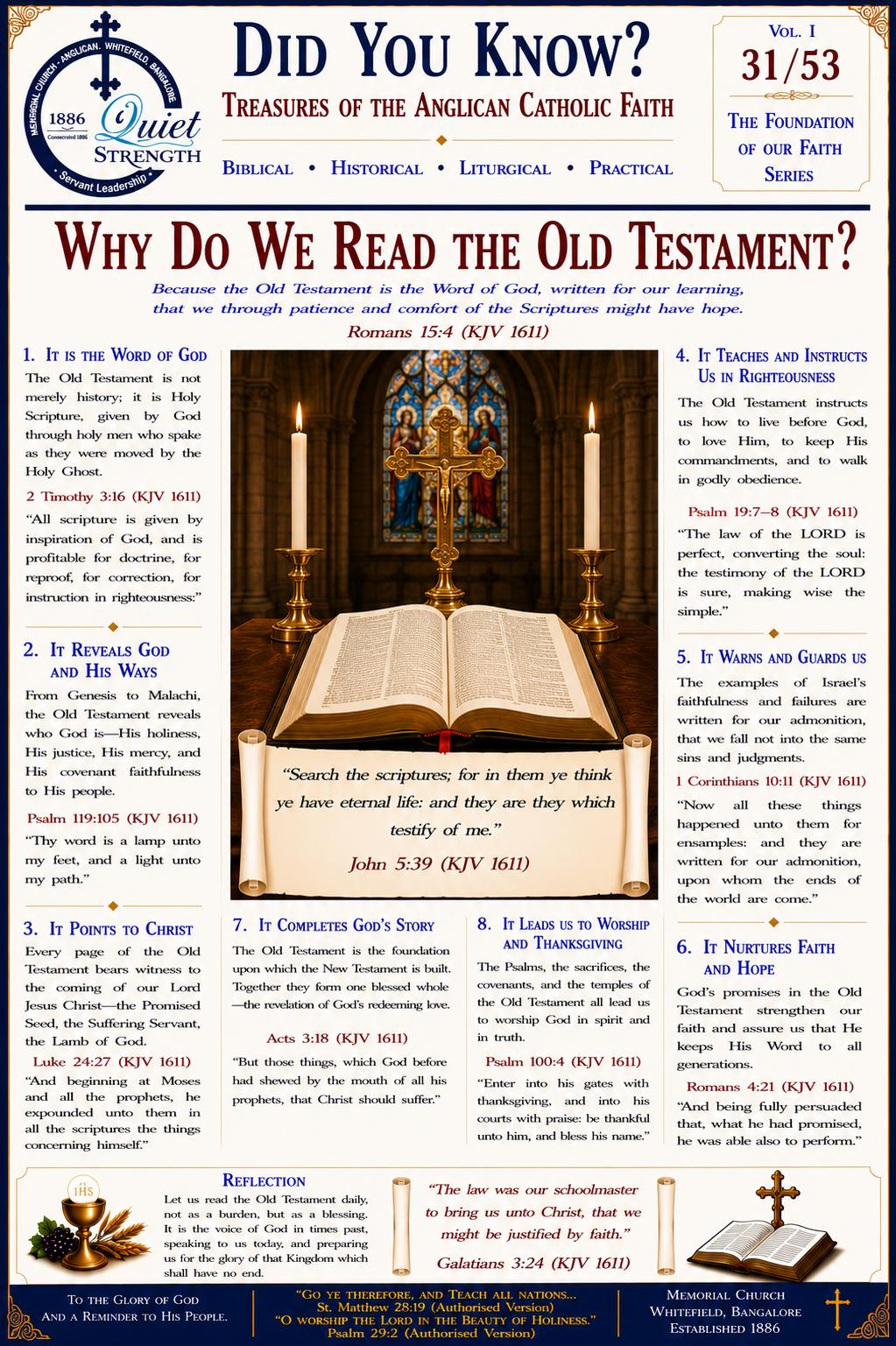
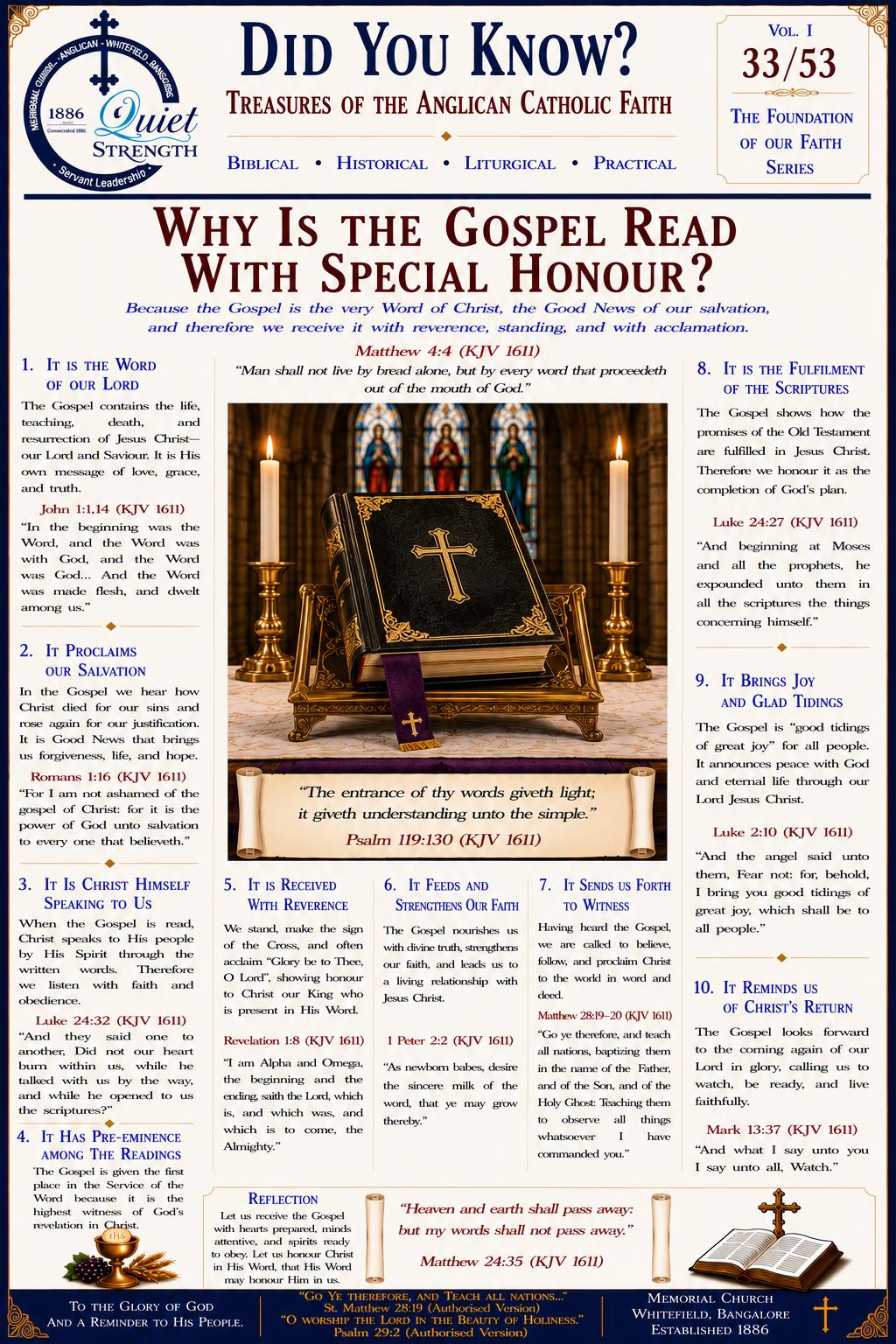
Printed books have played an important role in preserving Anglican worship, teaching and devotion across generations.
From the Book of Common Prayer to collections of sermons, hymns, Scripture and devotional writings, the printed page helped establish a shared language of worship while carrying the Faith from one generation to the next.
The Christian Year traditionally begins with Advent, a season of preparation before Christmas.
Easter celebrates the Resurrection of Our Lord Jesus Christ and stands at the heart of the Christian proclamation.
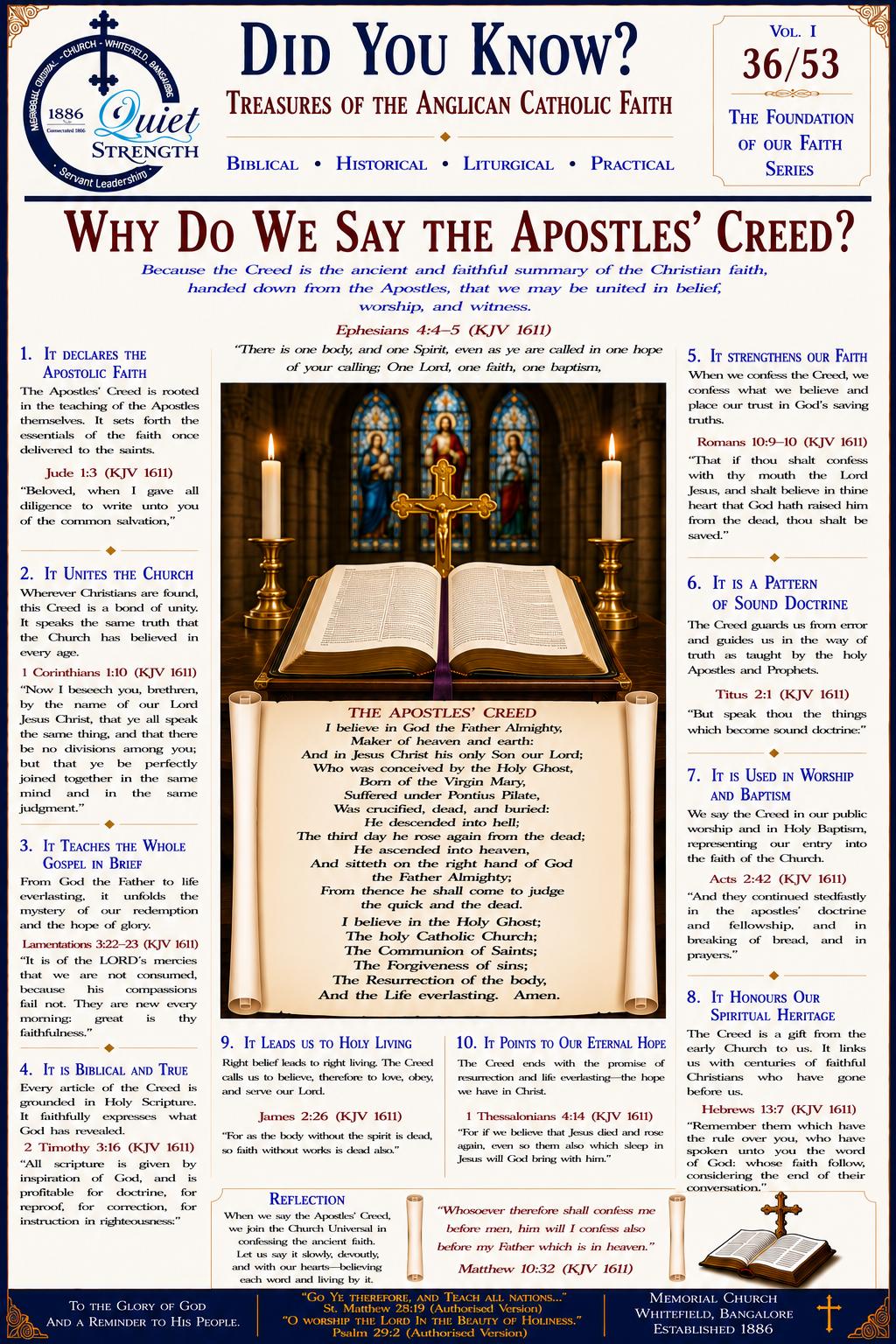
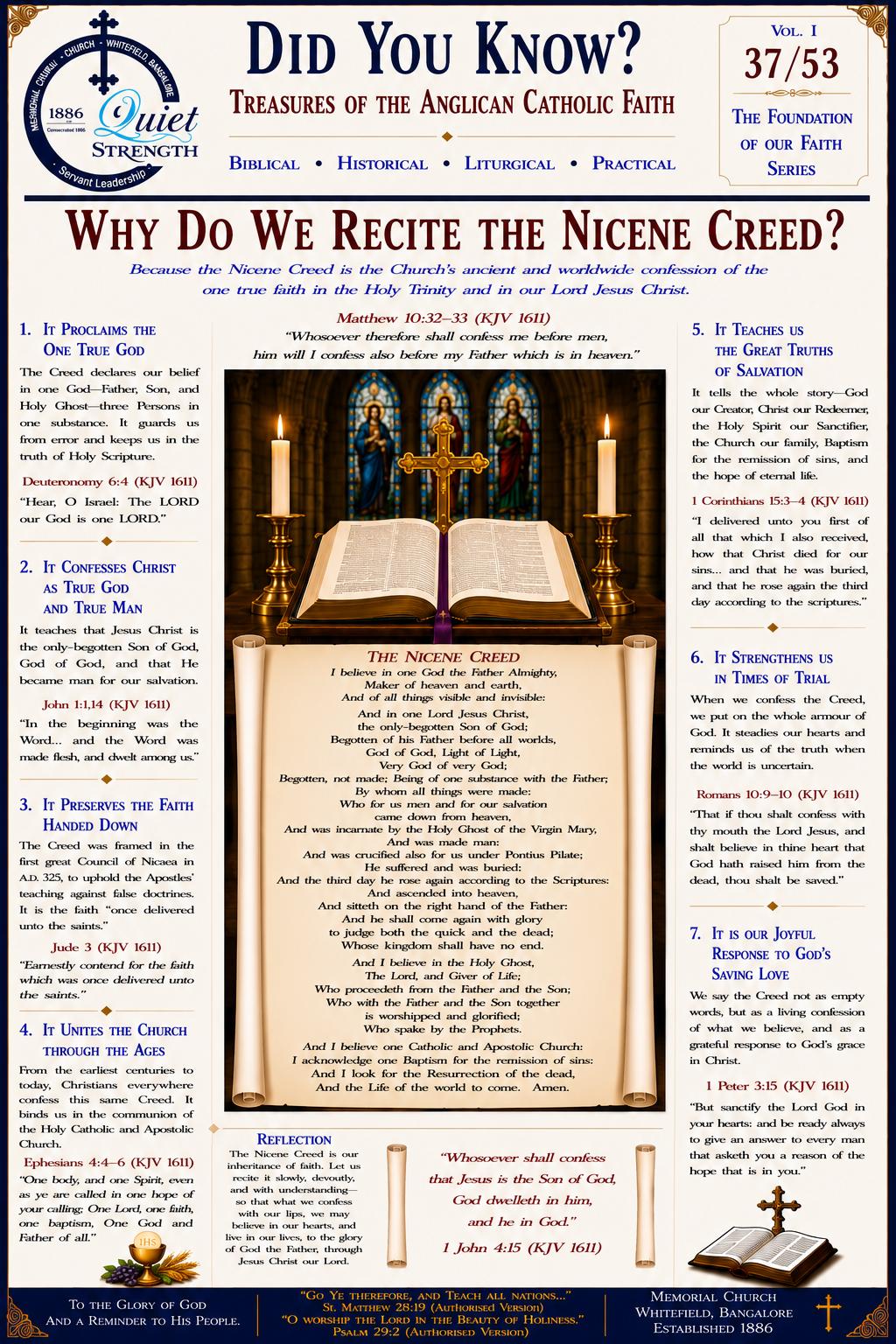
The Apostles’ Creed and Nicene Creed have long held an important place within Anglican worship and Christian instruction.
Lent is traditionally observed as a season of repentance, prayer, fasting and preparation for Easter.
Pentecost commemorates the coming of the Holy Ghost upon the Apostles.
The Psalms form a major part of Anglican daily prayer and have been prayed and sung throughout the history of the Church.
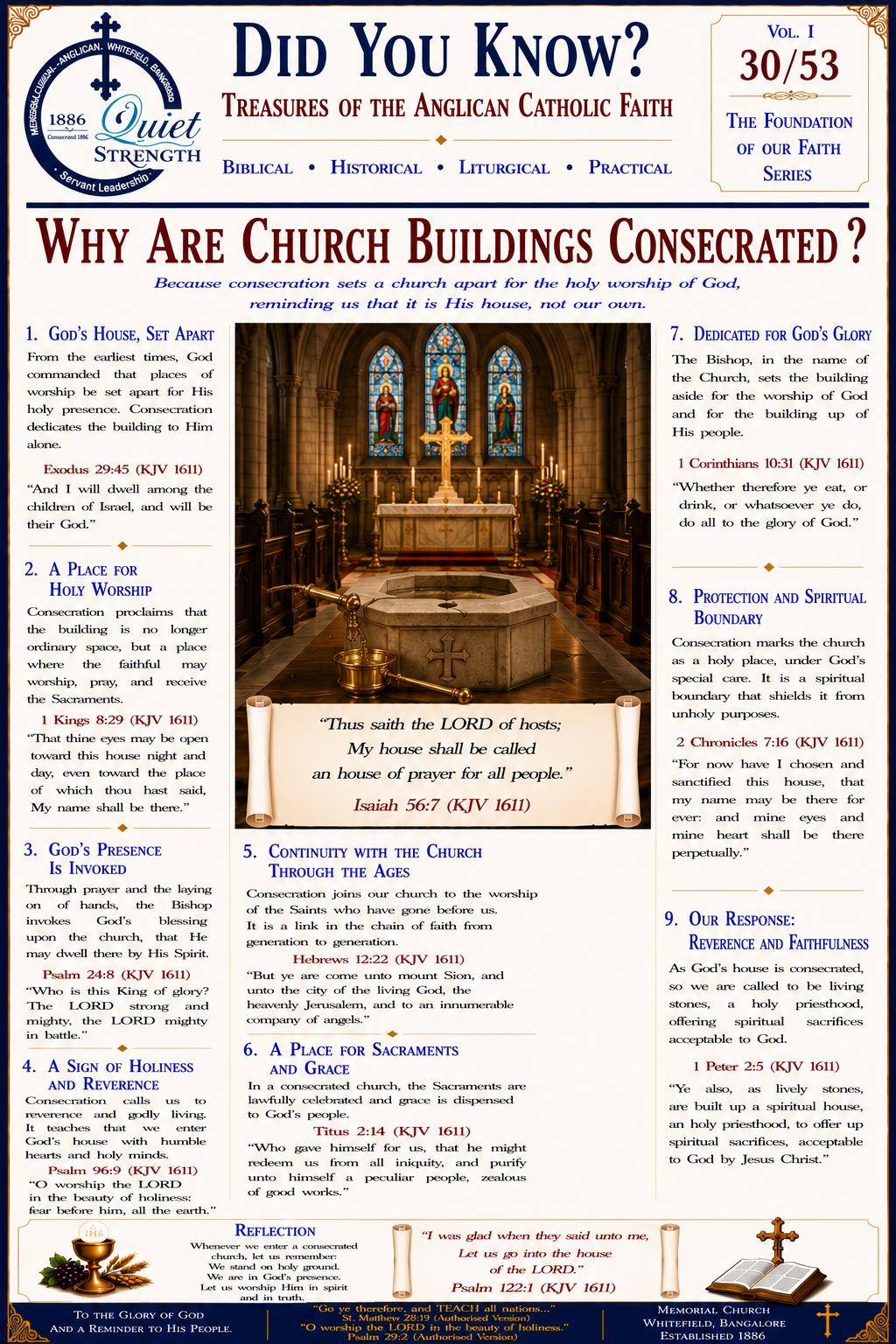
Did you know that church architecture, stained glass, sacred symbols and visual art have historically helped communicate the Christian Faith?
Before widespread literacy, visual representations within churches could help worshippers recognise biblical events, saints and important themes of Christian teaching.
Within the church building, such art also contributes to an atmosphere set apart for worship, prayer and contemplation.
The Book of Common Prayer was first published in 1549 under the direction of Thomas Cranmer, Archbishop of Canterbury.
It brought the daily prayers, Holy Communion, and other services of the Church into a common English form, profoundly shaping Anglican worship, prayer, devotion, and Christian life for generations.
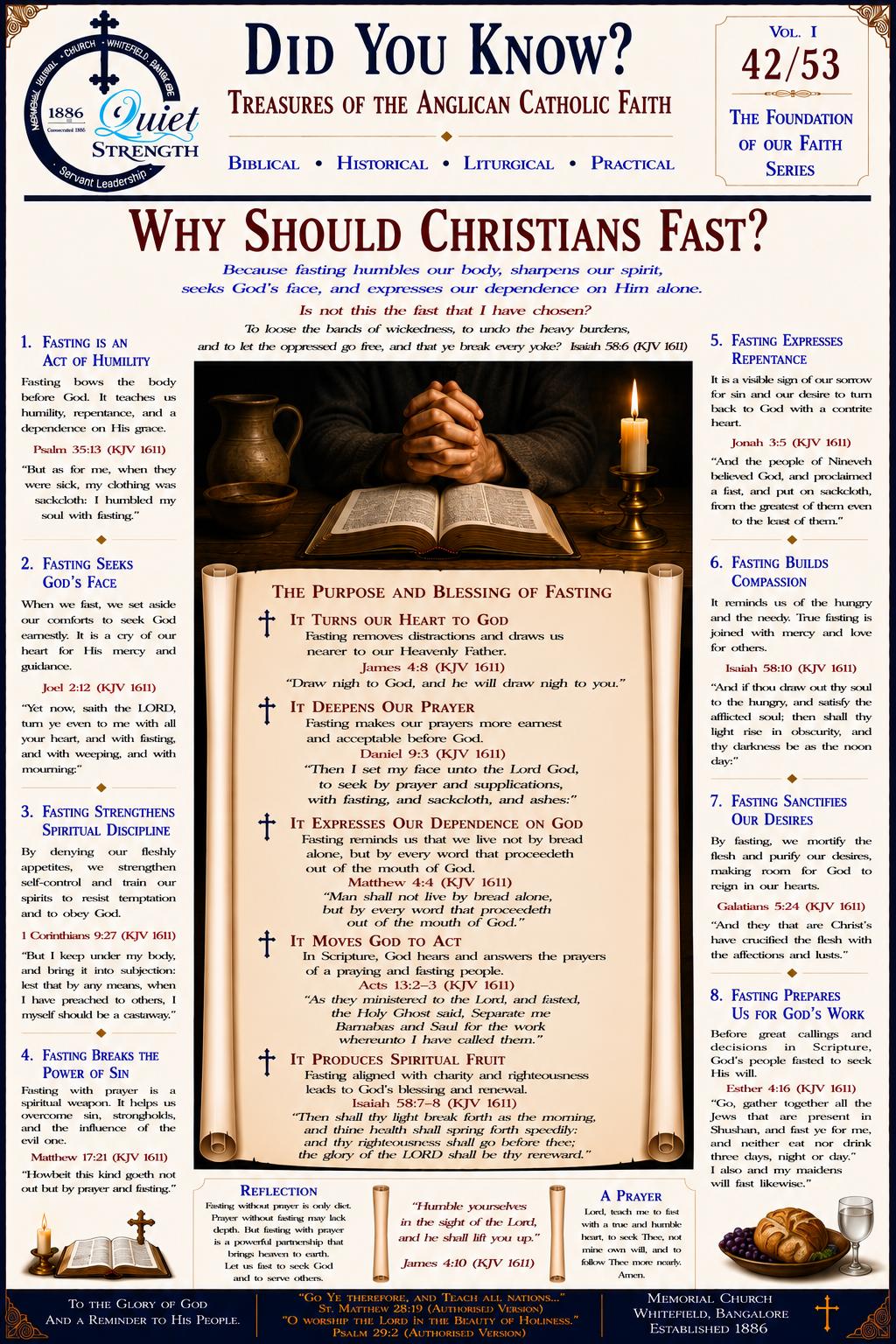
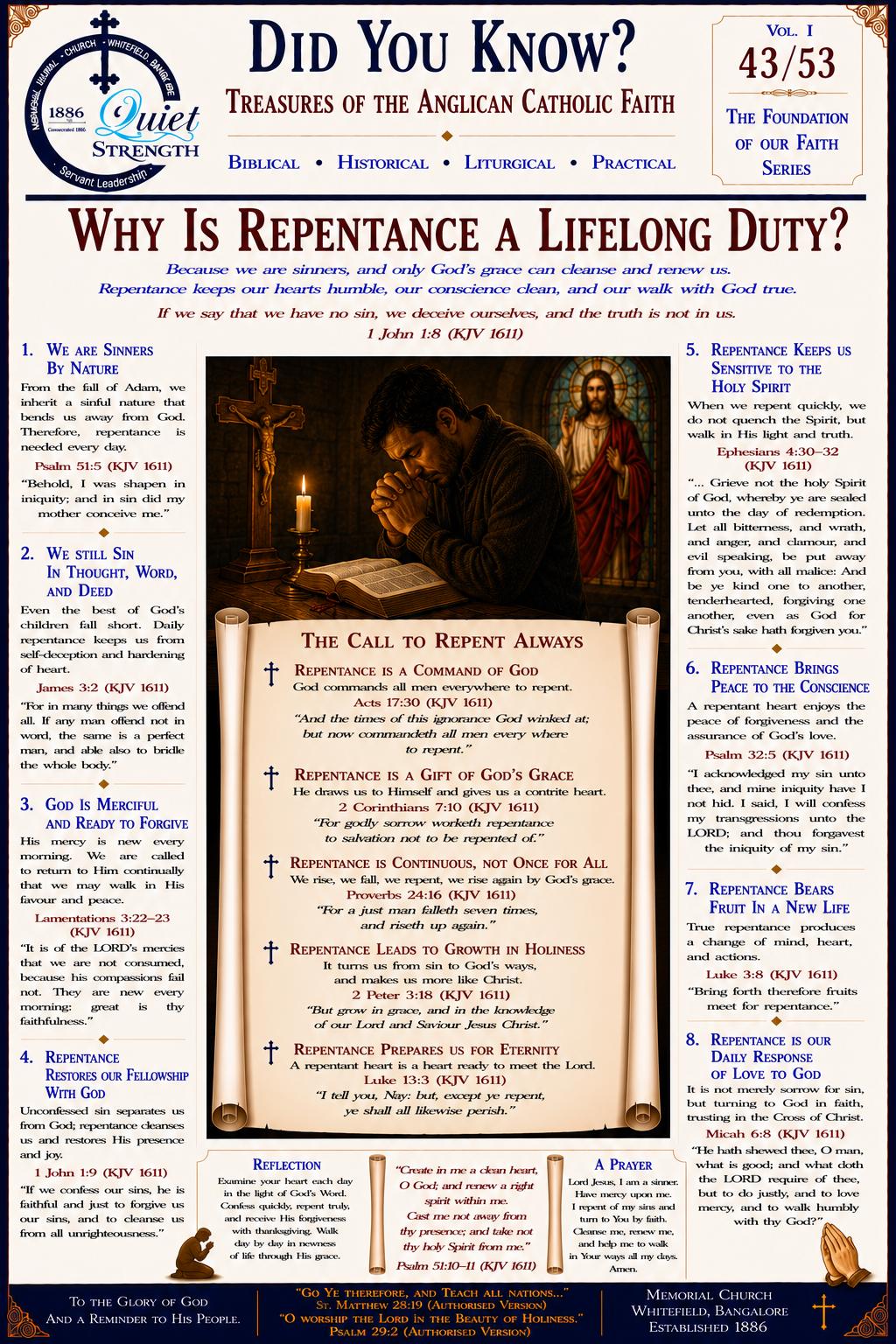
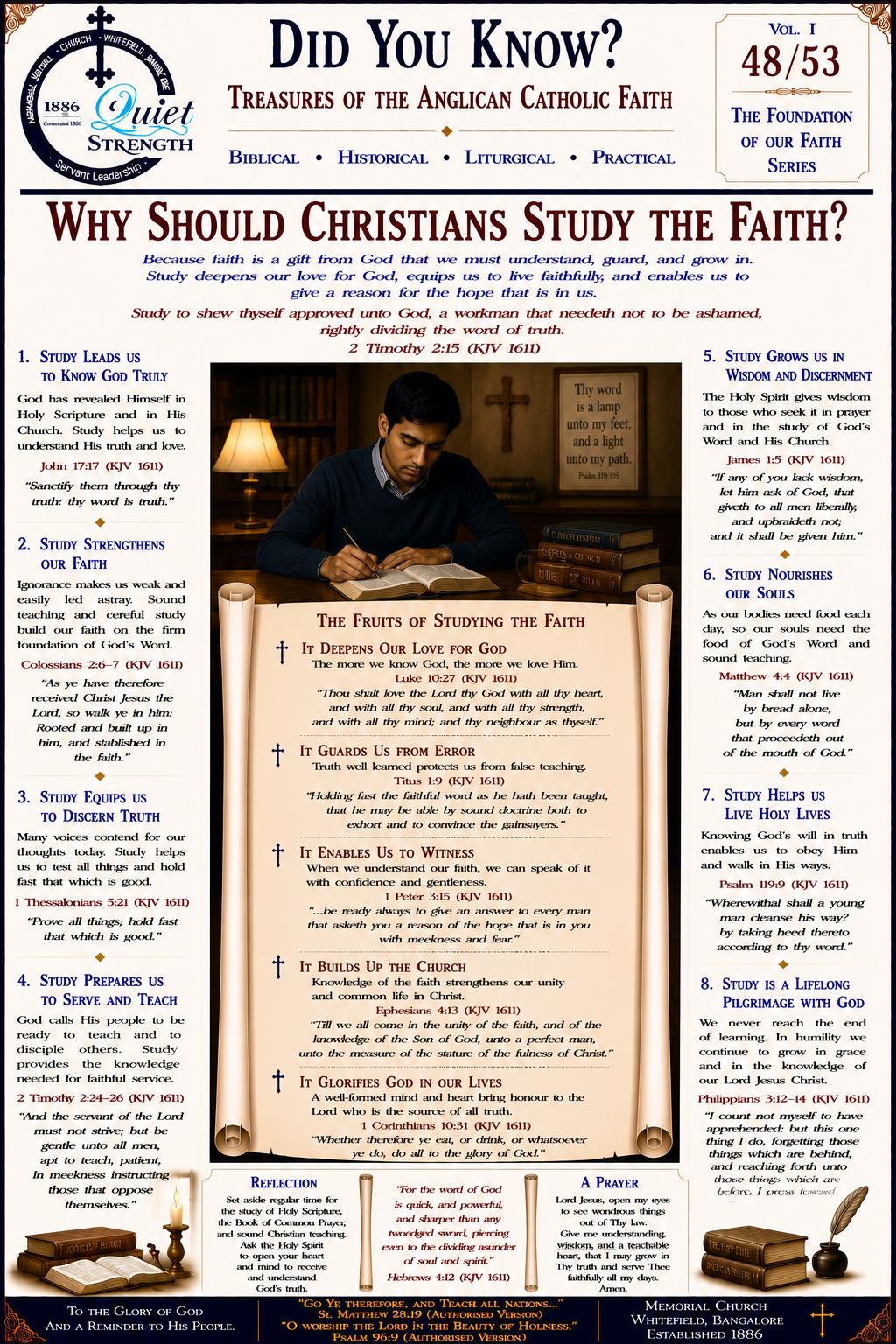
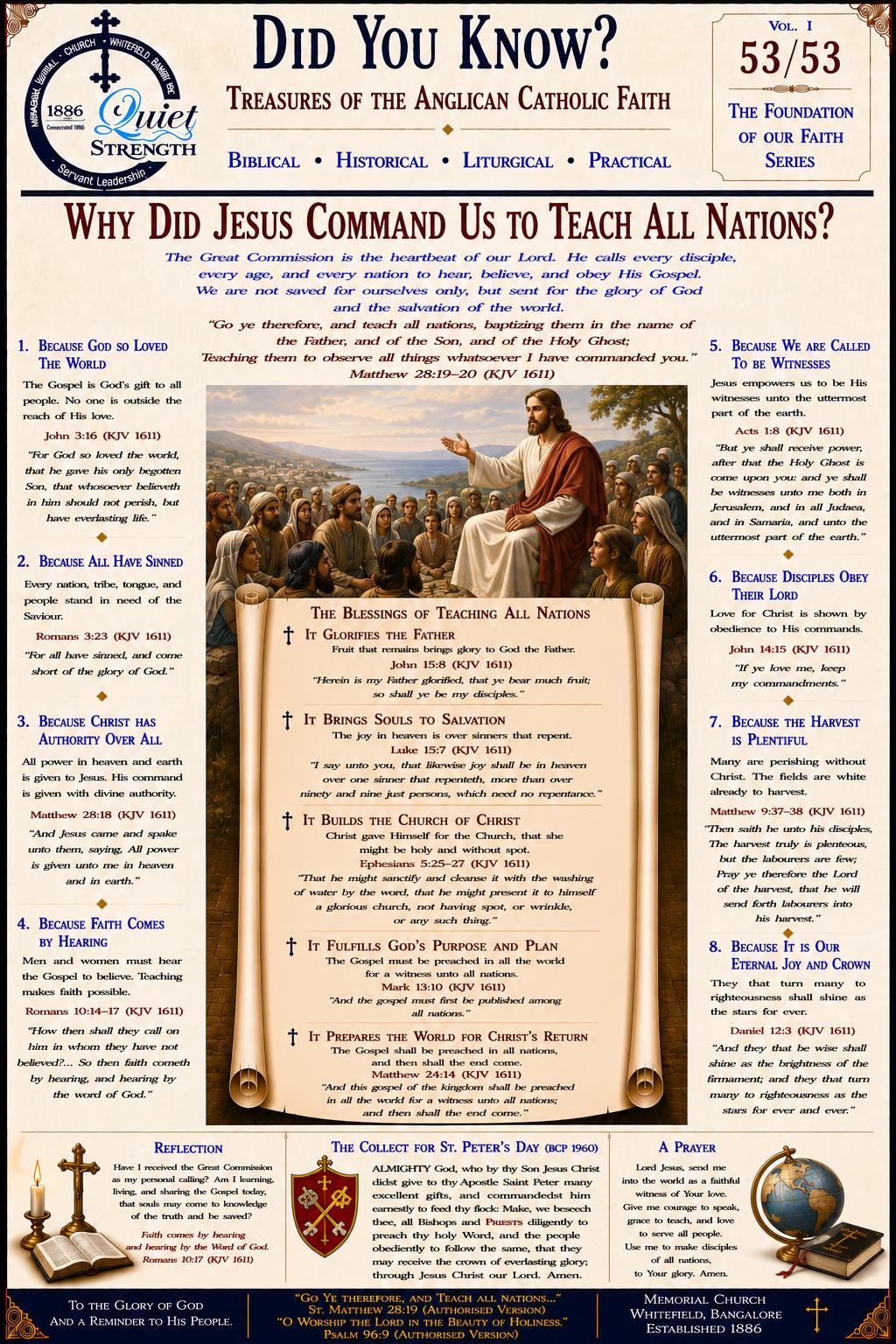
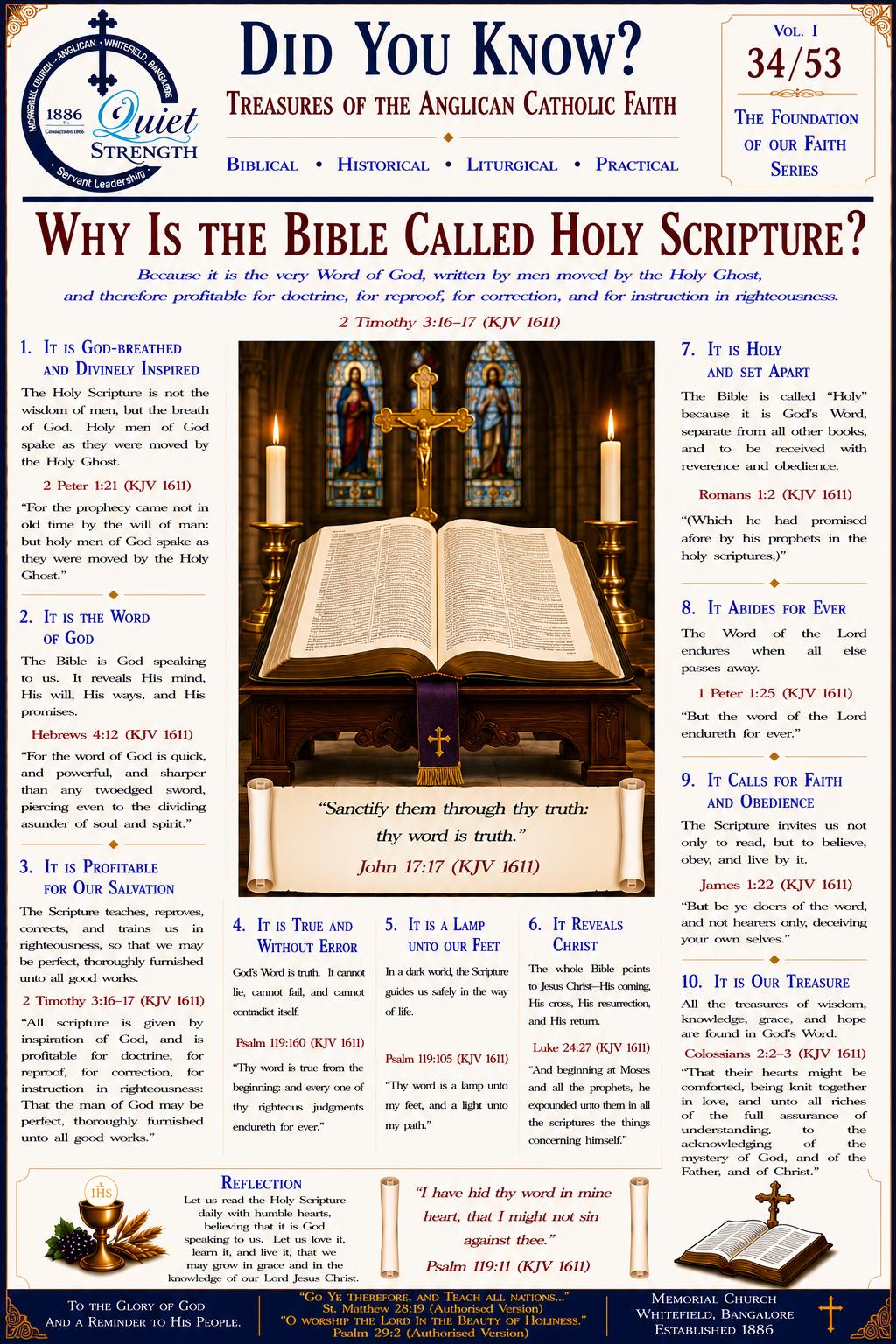
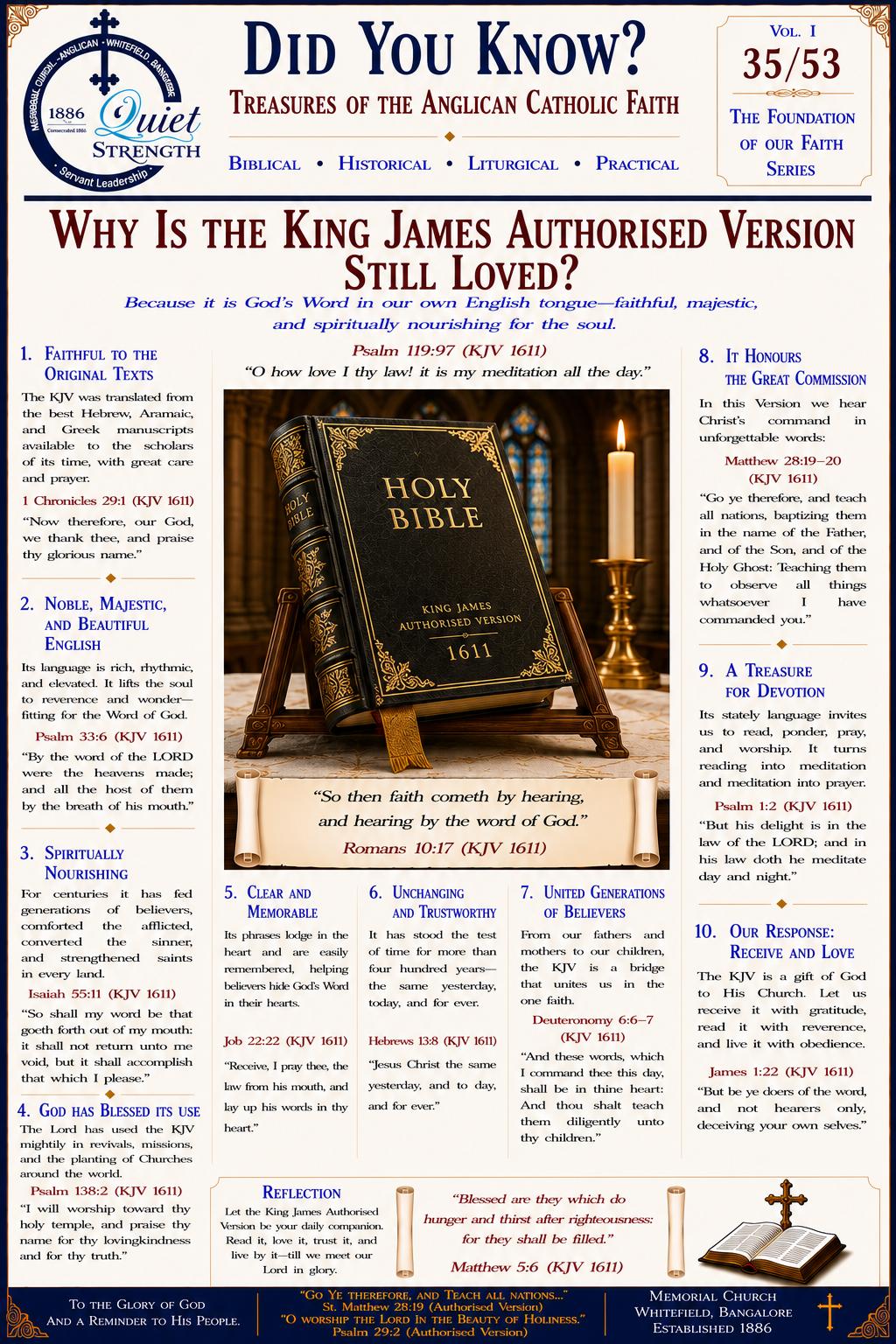
Explore Holy Scripture, Christian teaching, Bible studies and prayer.
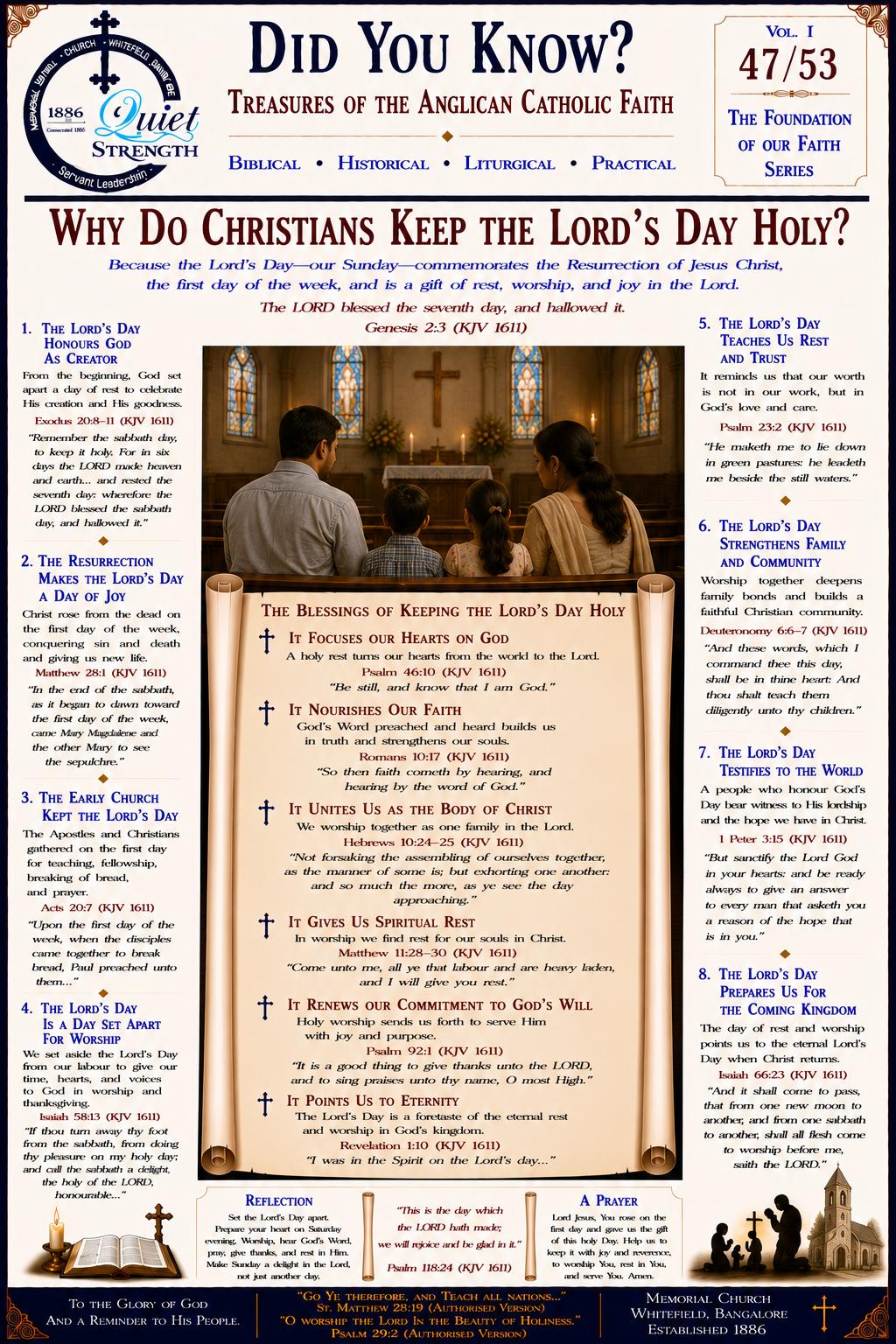
Explore Anglican liturgy, prayer, sacred music and the traditions of Christian worship.
Explore Anglican history, traditions and writings preserved through the years.